Disclaimer: This article is for educational purposes only, not legal advice. WES, USCIS, and IRCC requirements can change by program, country, and document type. Always follow your own account checklist and official instructions before submission.
About the author: Erin Chen is Co-Founder and Translation Strategist at CertOf. She has spent 10+ years in bilingual editorial risk control and immigrant document workflows across education, licensing, and immigration filings.
Do I Need Certified Translation for Foreign Diploma WES Evaluation? The 60-Second Answer
If your deadline is close, the answer to do i need certified translation for foreign diploma wes evaluation is usually yes when your diploma or transcript is not in the accepted language for your WES track. The practical goal is simple: submit one complete package that passes review the first time.
- Usually required: WES U.S. expects English translations; WES Canada expects English or French.
- No self-translation: WES says translations completed by applicants are not accepted.
- Counter-intuitive point: translations usually do not need a sealed envelope when account upload is available.
- Cost control: certified and notarized are different services, and notarization is often unnecessary for WES-only use.
Who This Guide Is For (and Why Files Get Delayed)
This page is for students, immigrants, and licensed professionals submitting foreign education records for evaluation. Most delays are not about your education quality. They come from preventable formatting and completeness issues: missing legends, untranslated seals, or inconsistent terminology across diploma and transcript.
Long-Tail Questions This Article Covers
- certified translation for WES Canada
- certified translation for ECE evaluation
- certified translation for SpanTran
- credential evaluation translation checklist 2025-2026
- WES rejected my translation
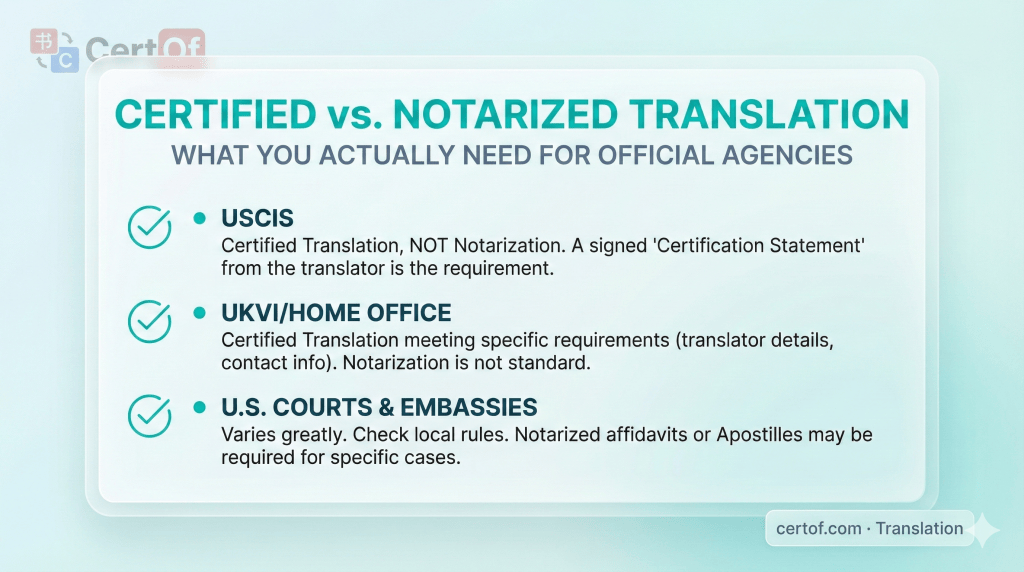
- difference between certified and notarized translation
What WES Actually Requires in 2025-2026
Use official WES instructions as your source of truth. In practice, the checklist is:
- Word-for-word completeness: include seals, stamps, side notes, and grading legends.
- Professional translator only: translation cannot be completed by the applicant.
- Correct submission path: upload translations where your account instructs, and follow institution channels for official records.
- Readable files: ensure every field, date, and course line is legible before upload.
Official references: WES translation requirements, WES upload instructions for degree certificates and translations, WES sealed envelope guidance, and WES Required Documents Tool.
The Counter-Intuitive Rule That Saves Weeks
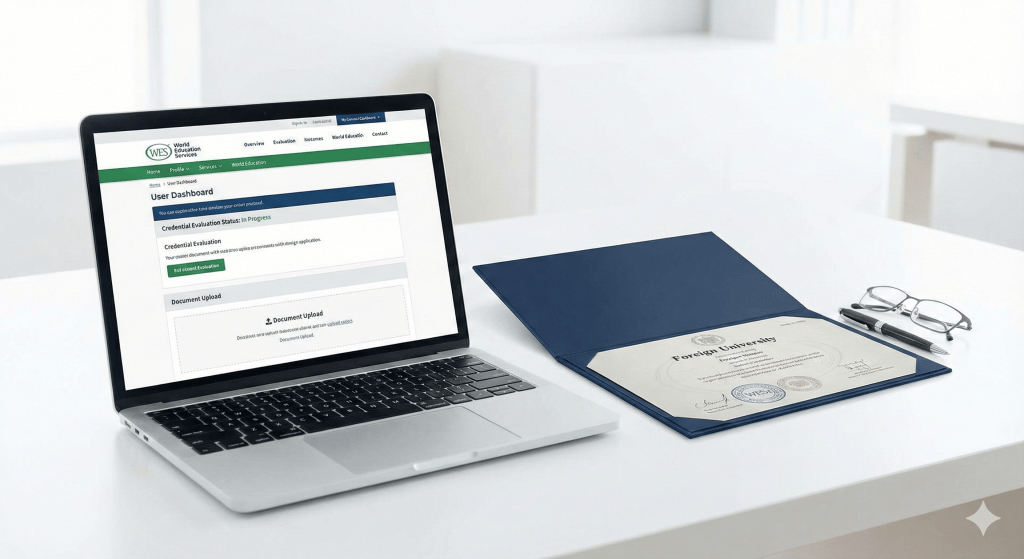
Many applicants wait for school-sealed translation packets. In many WES workflows, that extra step is unnecessary. Sealed-envelope controls usually apply to official academic records, while translations can be uploaded separately in your account. If your dashboard supports upload, use it and avoid avoidable mailing delays.
Another overlooked detail: WES notes that translation is not required in every case. It depends on your required-document list, not on forum advice.
Certified vs Notarized vs Affidavit
| Term | What it proves | Typical WES use | Typical immigration use |
|---|---|---|---|
| Certified translation | Translator attests completeness and accuracy | Core requirement when translation is requested | Common baseline for USCIS and many visa files |
| Notarized translation | Notary verifies signer identity, not translation quality | Usually not required by default | Sometimes requested by program-specific checklist |
| Affidavit | Sworn statement by translator when required by authority | Case-dependent | Often relevant for IRCC pathways if not using a certified translator |
For immigration crossover files, USCIS regulation 8 CFR 103.2(b)(3) requires a full English translation with translator certification of completeness, accuracy, and competence. For Canada, IRCC Help Centre (modified February 25, 2026) states documents not in English or French require translation and related supporting formalities unless otherwise instructed: IRCC language requirement page.
AI and Quality Claims in 2026: What Matters in Real Review
AI can speed drafts, but official acceptance still depends on accountable human certification and precise consistency. In practical review workflows, terminology mismatches (for example degree type names, grading legends, or provisional status wording) are common triggers for hold notices and resubmission.
Related reading: ISO 17100 certified translation provider guide.
Common Pitfalls and Real Consequences
- Missing grading key or back-page legend: evaluator cannot map your scale correctly, so the file is paused.
- Name mismatch across pages: transliteration inconsistency can trigger identity clarification.
- AI-only output with no accountable signer: fast draft, weak compliance chain.
- Paying for notarization by default: higher cost without improving acceptance when not required.
- Waiting for unnecessary postal routing: avoidable delay that can push you past admission or licensing windows.
If your file has already been flagged, do a clean rebuild instead of patching one page at a time. It reduces repeated upload cycles and conflicting revisions.
CertOf vs Traditional Translation Office
| Factor | CertOf | Traditional agency or law office |
|---|---|---|
| Price clarity | From $9.99 per page, transparent checkout | Often quote-based, variable add-ons |
| Speed | Many standard pages can be delivered in 5-10 minutes after payment | Commonly 24-48 hours or longer |
| Compliance focus | Acceptance-focused QA plus revision/refund policy | Usually no explicit acceptance guarantee |
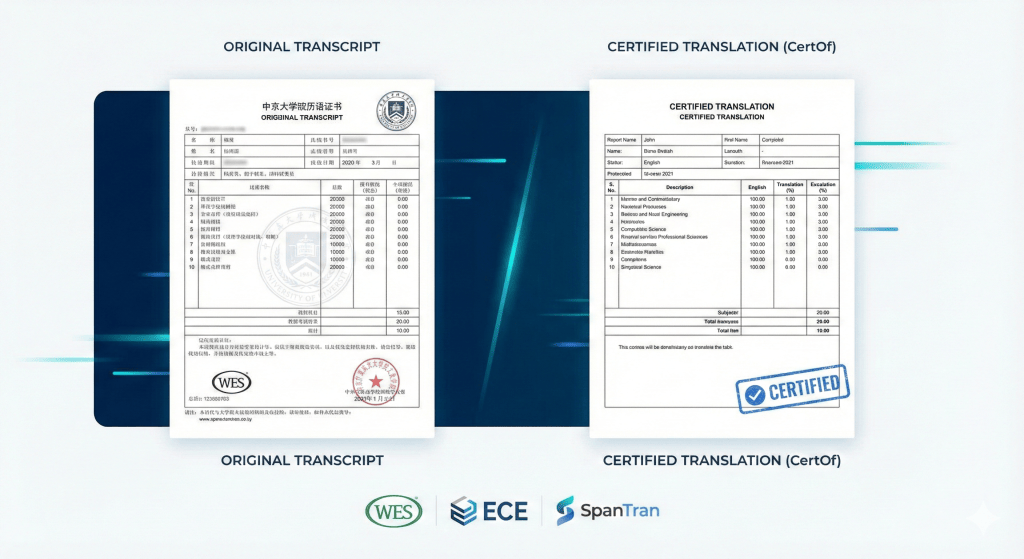
| Formatting quality | Mirror formatting for tables, seals, and signatures | Layout quality varies by vendor |
| Ordering | Fully online upload and payment flow | Email chains, office visits, or manual invoicing |
Commercial links: order certified translation online, get rush certified translation delivery, money-back certified translation policy, and request bulk certified translation support.
How to Get a WES-Ready Translation in 3 Steps
- Upload: send a clear scan or photo of diploma and transcript.
- Pay: confirm page count and checkout with transparent pricing.
- Receive: download the certified package with mirror formatting and certification statement.
Start your 10-minute WES-ready translation here: upload and order certified translation online. See also: upload and order certified translation online tutorial.
Trust, Privacy, and Institution Coverage
- Encrypted upload and controlled-access workflow for sensitive files.
- Document sets commonly prepared for USCIS, universities, licensing boards, banks, and courts.
- Rush handling available for urgent admissions, RFE, and deadline-driven evaluations.
FAQ
Can I translate my own diploma for WES?
No. WES says translations completed by applicants are not accepted. See also: can i translate my own documents for uscis.
Do translations need to be sent in a sealed envelope for WES?
Usually no. WES guidance says translations and degree certificates can be uploaded in your account, while official transcripts follow institution channels.
Do I need notarized translation for WES?
Usually not by default. Follow your exact WES checklist. For a deeper breakdown, read certified vs notarized translation.
What if WES rejected my translation?
Rebuild a complete package: full coverage, consistent names, mirror layout, and corrected certification statement. Helpful references: certified translation of academic transcripts for WES ECE SpanTran, USCIS RFE translation services, and USCIS rejected my translation.
Do I need certified translation for ECE or SpanTran too?
Often yes, but evaluator rules vary. Verify each agency checklist first. If you are comparing evaluator legitimacy, review the NACES member list before submitting.
Official Resources
- WES Translation Requirements
- WES Upload Degree Certificates and Translations
- WES Sealed Envelope Guidance
- WES Required Documents Tool
- 8 CFR 103.2(b)(3) Translation Rule
- IRCC Supporting Document Language Rules
Ready to move now? If your target is fast and compliant submission, start with certified translation services online and keep one clean package for WES, admissions, and downstream immigration use.