Who Can Translate Documents for an Italy Civil Lawsuit?
If you are preparing foreign-language documents for a civil lawsuit in Italy, the real problem is usually practical: who may translate them, whether your own translation will be challenged, whether a machine-generated version is usable, and whether a notary stamp is the same thing as an Italian sworn translation. In Italy, those are not small technicalities. They can affect whether your lawyer files a document confidently, whether the other side contests it, and whether you lose time arranging an in-person oath.
Key Takeaways
- In Italy, not every foreign-language document in a civil case must automatically come with a sworn translation. Under the Italian rules on language and translators, the judge has discretion, and recent Supreme Court guidance confirms that foreign-language documents are not automatically invalid just because a translation was not attached from day one.
- For asseverazione (the Italian sworn-translation route), the translator must appear in person and swear to the accuracy of the translation. Self-translation is therefore a poor fit and usually not acceptable for the sworn route.
- Notarization is not the same as sworn translation. A notary may receive the translator’s oath, but the notary does not certify that the text is substantively correct.
- Italy’s core rules are national, but tribunal practice still varies in the real world. Some offices are more flexible about who may swear a translation; others are stricter.
Who this guide is for
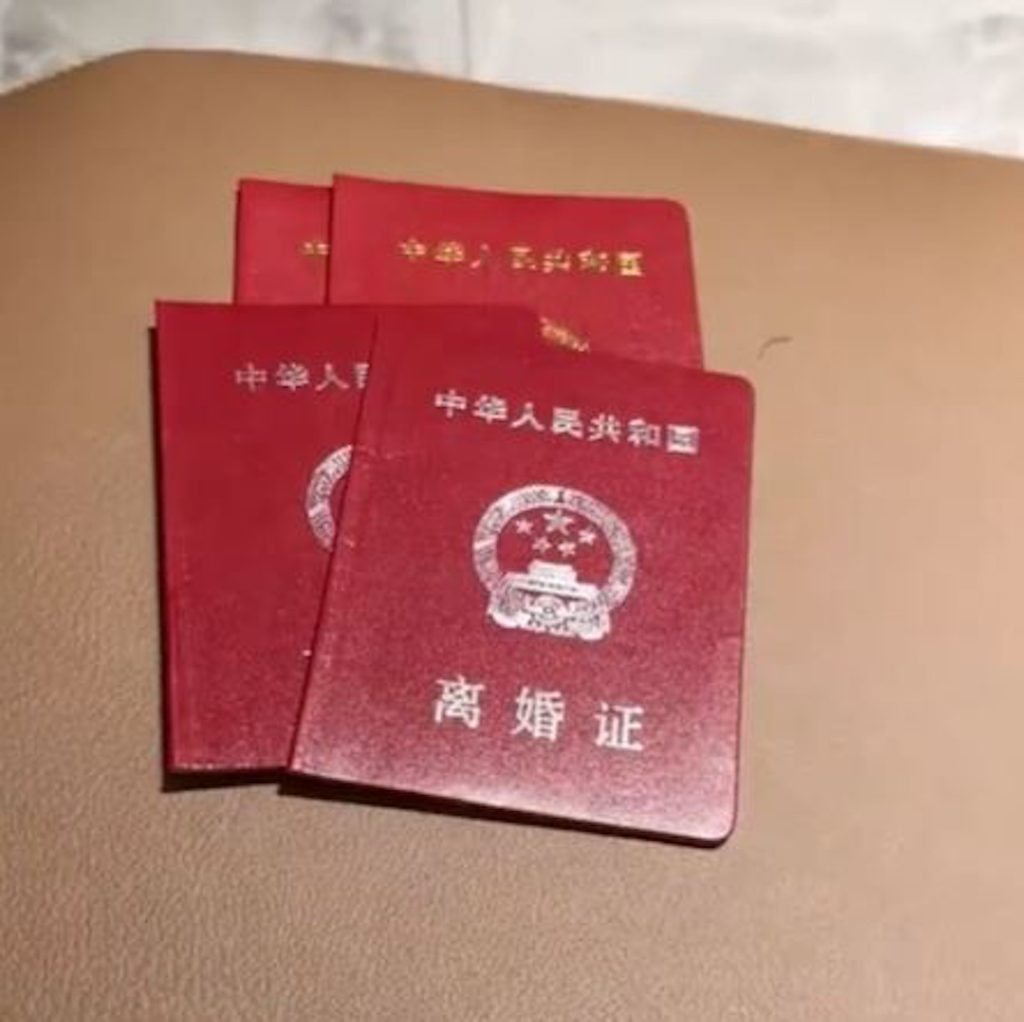
This guide is for people dealing with a civil lawsuit in Italy and trying to make foreign-language paperwork usable in that process. That includes foreign litigants, overseas parties sued in Italy, Italian lawyers handling cross-border evidence, and paralegals assembling a file that may include contracts, invoices, emails, WhatsApp messages, powers of attorney, company records, or foreign civil-status documents. The most common working pair is often English-Italian, but users in this situation also regularly face Chinese-Italian, Arabic-Italian, Romanian-Italian, Russian-Italian, Ukrainian-Italian, French-Italian, and Spanish-Italian combinations. The typical sticking point is not just translation quality. It is whether the translation will be treated as valid enough for a lawyer, the court, or the other side to rely on without forcing a last-minute redo.
The first Italy-specific rule: foreign documents are not automatically useless without a sworn translation
This is the most important non-obvious point for beginners. Italy requires the use of Italian in civil procedure, but that does not mean every foreign-language document becomes void if you file it without a sworn translation. The Italian rules on language and translators give the judge room to decide whether a translator is needed. Recent Supreme Court guidance also confirms that foreign-language documents and foreign powers of attorney are not automatically invalid just because no Italian translation was attached at the outset.
That matters because many users assume the answer is always “get everything sworn immediately.” In practice, the safer answer is narrower: if the document is important, likely to be contested, or central to proving your case, a proper translation is often the defensive move even when the law does not make it mandatory in every instance.
For broader cross-border court evidence standards, refer to our guides on Certified Translation for Court Proceedings, Depositions, and Exhibits and Modena Civil Lawsuit Foreign Document Translation.
So who can translate documents for an Italy civil lawsuit?
For a plain translation, the practical answer is broad: any competent translator can prepare it. But for a translation that you want to use confidently in a disputed civil setting, the safer answer is a neutral third party with legal-document experience, not the litigant and not a family member.
For a sworn translation in Italy, the key point is different. The person who actually prepared the translation must personally swear to it before a court clerk, a justice-of-the-peace office, or a notary. Official court guidance is not fully uniform on local eligibility filters. For example, Tribunale di Torino states that the translator may be either registered or non-registered, provided the person is different from the interested party and not a relative. By contrast, Tribunale di Milano applies a more structured office practice around who may swear translations. That local variation is one reason users should not rely on generic agency claims like “court-certified translator in Italy” without checking the actual office that will handle the oath.
Can you translate your own documents?
For real-world litigation use, this is usually the wrong move. Even where a court is not demanding a sworn translation on day one, self-translation creates an obvious credibility problem. In the sworn route, it is worse: multiple Italian court guidance pages frame the translator as a third party who appears personally and assumes responsibility for the translation. That is why self-translation is not the safe path for asseverazione, and why lawyers often reject it before filing.
If your case file includes handwritten notes, screenshots, or message threads, the issue is not just language. It is also completeness, legibility, and exhibit handling. For formatting challenges with digital evidence, see our guides on Certified Translation of WhatsApp Messages for Court and Certified Translation of Screenshots of Bank Statements.
Can machine translation be used?
As a filing shortcut, machine translation is weak. As a sworn-translation route, it is not a usable answer. Italian sworn translation depends on a human translator personally appearing and swearing that the translation is faithful. A machine cannot do that, and a person who signs off on a machine output assumes responsibility for every mistake anyway.
That does not mean machine translation has zero internal value. It may help you triage a large file or identify which exhibits need full translation first. But if the question is whether machine translation is acceptable as the final civil-court solution in Italy, the practical answer is no.
Notarization vs sworn translation in Italy
This is where many foreign users get trapped. In Italy, notarization and sworn translation are different things. A notary can be part of the sworn route because the oath may be taken before a notary instead of a court clerk. But the notary is not certifying the linguistic quality of the translation. The legal weight comes from the translator’s sworn declaration of fidelity, not from the idea that a notary has reviewed every word for accuracy. In practice, the tribunal route usually means paying stamp duty only, while the notary route is often faster but adds private professional fees.
For a broader explanation of these concepts worldwide, read our guide on Certified vs Notarized Translation. In the Italy civil-litigation context, the takeaway is simpler: a notary is an alternative oath-taking node, not a magic upgrade that turns a weak translation into a reliable one.
How the process usually works in real life
- You identify which documents actually matter to the dispute: contracts, emails, chats, banking proof, corporate records, foreign certificates, powers of attorney, or judgments.
- You decide whether a plain professional translation is enough for lawyer review and early filing, or whether a sworn translation is the safer choice because the document is central, likely to be contested, or needed for formal downstream use.
- If a sworn translation is needed, the translator who prepared it must appear personally before the relevant office or notary and sign the oath.
- You account for Italy-specific paperwork, especially stamp duty rules and local office booking constraints.
- If the document will later be used abroad, a separate legalization or apostille chain may be needed after the oath. That is a different question from whether the translation itself is accurate.
The logistics reality in Italy
This is one of the most location-specific parts of the topic. Italy’s core rule is national, but the handling experience is local and physical. Many users imagine they can upload a file, receive a PDF, and be done. That is not how the Italian sworn route works.
- The translator usually must appear in person for the oath.
- Tribunal offices commonly work by appointment rather than open walk-in access.
- You do not mail the oath to the court; the sworn step is handled in person.
- Large files create stamp-duty and scheduling friction fast.
- Some offices are more permissive than others about who may appear as translator.
Tribunale di Roma describes a personal appointment-based process and also notes identity-document requirements, including residence details and extra residence-permit information for non-EU citizens appearing for the oath. Tribunale di Milano publishes cost mechanics and same-day formalization for the act once the appointment is handled. To find the relevant court or office network, users can start with the Ministry’s Giustizia Map.
Costs and bottlenecks that surprise foreign users
The recurring Italian friction points are not mysterious legal doctrines. They are operational:
- Stamp duty: Milan’s official page states that a €16 stamp applies every four pages, with line-count rules also affecting the calculation.
- Appointment friction: tribunal access is not the same as an on-demand retail service.
- Volume pain: large litigation bundles can become expensive and slow if you wait until the last minute.
- Foreign-to-foreign language traps: some offices explicitly reject the idea that you can jump directly from one foreign language to another for a sworn product without passing through Italian practice.
Those issues explain why many litigants first commission a clean, review-ready translation package and only then decide which documents justify the more formal sworn route.
What public user signals say
Public discussions from foreign-resident forums, Italian legal commentary, and practitioner write-ups point to the same few pain points again and again: users are surprised that self-translation is treated as a non-starter; they underestimate booking delays; they confuse foreign “certified” formats with Italian asseverazione; and they discover late that stamp-duty math matters on large evidence sets. A recurring practical warning is that, at busier tribunals, appointment slots can disappear quickly after release, so it is unwise to wait until a filing deadline is close before arranging the translation path. Those are useful real-world signals, but they are still weaker than official court guidance, so they should shape your risk planning rather than replace the court’s own instructions.
Commercial providers: where they fit and where they do not
For this topic, the provider question should be framed carefully. Most users first need a competent translation partner for heavy text, difficult formatting, and exhibit organization. That is different from the final oath step.
| Commercial provider | Public signal | What it appears to handle | Best fit | Boundary |
|---|---|---|---|---|
| TRW, Milan Via Bernardo Quaranta, 45, 20139 Milano +39 02 500 333 21 |
Italy-based agency with a dedicated sworn/certified translation service page | Legal and official-document translation, sworn-translation process explanation | Users who want an established agency workflow | The final sworn act still depends on the individual translator and local office practice |
| Traducta Italy Via Conservatorio, 22, 20122 Milano 800 796 097 |
Italian office, multilingual service pages, published contact details | Official/certified translation across many language pairs | Users with mixed personal and business documents | Marketing language should still be checked against the tribunal handling the oath |
| InfoVisti Via Giuseppe Pecchio, 1, 20131 Milano 02 36503790 |
Italy-based document-service site with sworn-translation information and full contact details | Sworn-ready document handling for administrative and legal paperwork | Users already navigating Italian bureaucracy | Do not assume that an agency page overrides the receiving court’s own rules |
Public resources and complaint paths
| Public resource | What it helps with | Cost | When to use it |
|---|---|---|---|
| Giustizia Map | Find the relevant tribunal or judicial office | Free | Use this first if you do not know which office handles the oath where you are |
| Tribunale di Torino guidance | Shows the third-party rule and confirms that a non-registered translator may be accepted there | Free | Useful as a concrete example of a more flexible tribunal practice |
| AGCM consumer reporting channel Piazza G. Verdi, 6/a, 00198 Roma 800 166 661 |
Misleading-advertising complaints, including inflated claims of “official” translator status | Free | Use this if a provider misrepresents itself as nationally court-certified or officially endorsed |
| Consiglio Nazionale del Notariato | General notary information and a starting point if you need to identify the notarial system behind the oath route | Free | Useful when you are comparing tribunal handling with the notary option or need to escalate a notary-related issue |
Why Italy is different from some other countries
Italy is not a country where the safest user-facing answer is simply “hire a nationally certified translator from the official register.” The Italian system is built around the oath process, local office practice, and the translator’s assumption of responsibility. That is why the local terms traduzione giurata, traduzione asseverata, and asseverazione fit better than forcing “certified translation” into every sentence. On CertOf, “certified translation” is still a useful bridge term for international readers, but in Italy it should be explained through the local mechanism rather than treated as the native label.
When CertOf fits this workflow
CertOf fits best at the document-preparation stage: translating long contracts, message threads, screenshots, financial attachments, and mixed exhibit bundles into a clean, review-friendly package that a lawyer or local sworn translator can actually work with. That can save time and rework, especially when only part of a large file ultimately needs the in-person Italian oath.
Use CertOf when you need speed, consistent formatting, revision support, and a reliable translation base. Then confirm with your lawyer or receiving office whether the final Italian sworn step is necessary for every document or only for the most sensitive ones. You can start here: submit your files online, see how online ordering works, review turnaround and revision options, or compare turnaround expectations by document type.
Pitfalls to avoid
- Assuming a foreign “certified translation” format automatically matches Italian sworn-translation expectations.
- Using your own translation because the document seems simple.
- Waiting until a filing deadline to ask whether an oath is needed.
- Confusing a notary’s involvement with substantive linguistic review.
- Ignoring stamp-duty and page-count consequences on large evidence files.
FAQ
Can I translate my own documents for a civil lawsuit in Italy?
That is usually a bad idea. For the sworn route, it is generally inconsistent with the third-party structure of the oath process. Even outside the sworn route, self-translation is far easier for the other side to challenge.
Does Italy accept machine-translated court documents?
Not as a reliable final solution for civil litigation, and not as a sworn translation route. A human translator must stand behind the text.
Does every foreign-language document need a sworn translation?
No. That is the key Italy-specific nuance. Judges have discretion, and not every foreign document is automatically invalid without a sworn translation. But important or contested documents are safer with a strong translation strategy.
Is notarization the same as sworn translation in Italy?
No. A notary may receive the oath, but notarization is not the same thing as certifying the translation’s linguistic accuracy.
Does the translator need to be on a national official register?
Italy does not operate with a simple nationwide answer of that kind. Local office practice matters. Some tribunals are more flexible; some are stricter.
Disclaimer
This guide is general information, not legal advice. Court handling can vary by tribunal, by judge, and by the role the document plays in your case. Before filing a critical exhibit, confirm the expected translation format with your Italian lawyer or the receiving office.
CTA
If you need a clean English, Italian, Chinese, Arabic, Romanian, Russian, Ukrainian, French, or Spanish translation package for contracts, chats, invoices, corporate records, or other litigation exhibits, CertOf can help you prepare the file before the final submission decision is made. Start with your upload, review our pricing-positioning guide, or see whether you need digital or paper delivery in this format guide.