Russian Civil Lawsuits: Apostille, Legalization, and Notarized Russian Translation for Foreign Documents
If you are dealing with foreign documents for Russian court apostille notarized translation issues, the real problem is usually not translation alone. In Russian civil lawsuits, foreign official documents often need two separate things before they are usable: proof that the document is formally acceptable in Russia, and a properly certified Russian-language version the court can read. Those are different functions, and confusing them is one of the most common reasons people lose time.
Disclaimer: This guide is for document-preparation and translation planning only. It is not legal advice and does not replace case-specific advice from a Russian lawyer, notary, or the court handling your case.
Key Takeaways
- Apostille or consular legalization confirms the foreign document’s official authenticity chain. A notarized Russian translation solves the language problem. In Russian court practice, one does not replace the other.
- Under Article 408 of the Russian Code of Civil Procedure, foreign-language documents must be filed with a properly certified Russian translation.
- Under Article 106 of the Fundamentals of Notariate, Russian notaries usually expect the foreign official document to have completed its legalization chain first, unless a treaty removes that step.
- The apostille page, legalization stamps, annotations, seals, and attached sheets normally need to be translated too. Leaving them out is a practical failure point, not a minor formatting issue.
If the apostille or legalization page is not translated, the package may be incomplete even when the main certificate itself has been translated correctly.
Who This Guide Is For
This guide is for people using foreign official documents in a civil lawsuit in Russia at the national level. The most common readers are:
- Foreign plaintiffs or defendants filing evidence in a Russian court of general jurisdiction.
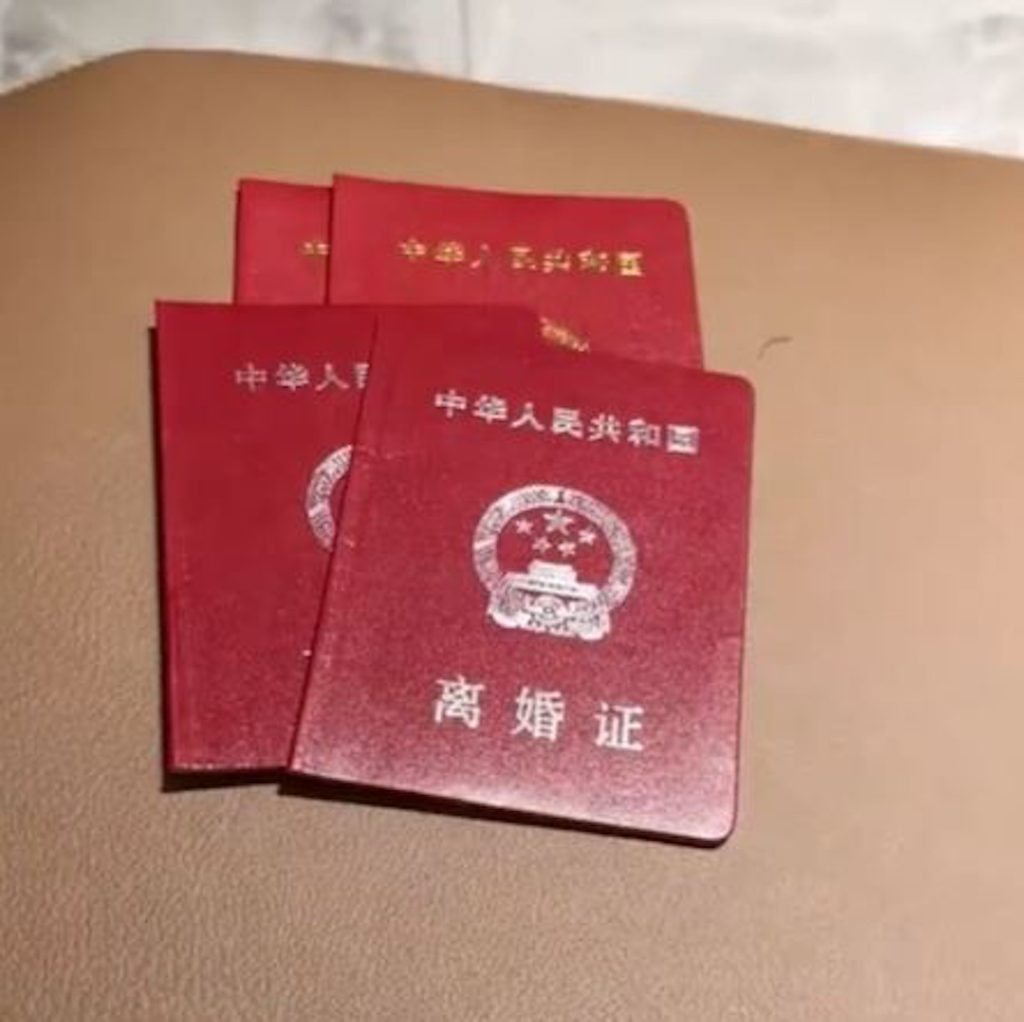
- Russian citizens relying on documents issued abroad, such as marriage, divorce, birth, death, residence, or name-change records.
- People issuing a power of attorney abroad so a Russian representative can act for them in court.
- Families and cross-border litigants who already have the original document but do not know whether they need apostille, legalization, a Russian notary, or all three.
The most common language direction is not “English to Russian” only. It is any non-Russian language into Russian. Typical document sets include civil-status certificates, foreign court or administrative records, foreign registry extracts, powers of attorney, and supporting pages that carry apostilles, seals, or consular marks.
Foreign Documents for Russian Court: Which Step Comes First?
Russia is not a place where you can treat “certified translation” as a vague global term and hope the court will sort out the rest. The core rules are federal, not city-specific. Article 71 of the Russian Code of Civil Procedure deals with foreign written evidence, and Article 408 says foreign-language documents must come with a properly certified Russian translation. The notarial side is covered by Article 81 of the Fundamentals of Notariate and the foreign-document acceptance rule in Article 106.
In practice, four Russia-specific problems keep appearing:
- People think apostille is “enough” because it looks official. It is not enough if the court record still lacks a proper Russian version.
- People translate first and authenticate later. That often fails because the apostille or legalization page itself becomes untranslated new content.
- People assume treaty-based exemption from legalization also removes the Russian translation requirement. It usually does not.
- People upload scans through the court e-filing system and assume they will never need the paper original. That is risky.
The counterintuitive point is simple: in Russia, the court is not really looking at “a translation” as a standalone product. It is looking at a complete evidence package that must be readable in Russian and formally acceptable as a foreign official document.
When You Need Apostille, Consular Legalization, or Neither
Start with the document’s country of origin, not with the translator. Russia is a party to the Hague Apostille Convention, and the Hague Conference keeps the current status page here: HCCH Apostille information. If the issuing country is covered for your document type, apostille is usually the authentication route. If the issuing country is not in the relevant Hague route, consular legalization may be required instead.
There is a third branch: treaty-based exemption. For some countries, including certain CIS relationships, documents may circulate without apostille or consular legalization under treaty rules. The classic reference point is the Minsk Convention. But even if legalization drops out, the Russian-language filing requirement under Article 408 still remains.
| Situation | What solves authenticity | What still solves language |
|---|---|---|
| Document from a Hague Apostille state | Apostille from the issuing country’s competent authority | Properly certified Russian translation |
| Document from a non-Hague route | Consular legalization chain | Properly certified Russian translation |
| Document covered by a treaty exemption | No apostille/legalization for that step | Properly certified Russian translation still usually needed |
The Russian Foreign Ministry’s consular department explains the legalization function and workflow at KDMID legalization guidance. Since Federal Law No. 145-FZ took effect on January 1, 2025, Russia now has a more unified federal framework for legalization of Russian and foreign official documents. That law matters for the formal chain, but it does not remove the separate court-language requirement.
Where Notarized Russian Translation Fits
The natural Russian term here is not “certified translation.” It is usually нотариально заверенный перевод, нотариально удостоверенный перевод, or the procedural wording надлежащим образом заверенный перевод на русский язык. That is why English-speaking litigants often get confused: the local legal expectation is narrower and more formal than the broad Anglo-American phrase “certified translation.”
Under Article 81, a Russian notary either certifies the accuracy of a translation if the notary knows the language, or certifies the translator’s signature if the translation was done by a translator. That is the point where the Russian filing package becomes court-ready.
This is also why the order matters so much. If the foreign document still lacks apostille or legalization when that step is required, a Russian notary may refuse to handle the translation package under Article 106. The practical sequence is usually:
- Get the foreign official document in final form.
- Check whether apostille, consular legalization, or treaty exemption applies.
- Complete that authenticity step first.
- Translate the full package into Russian, including apostille, seals, annotations, and attached pages.
- Have the Russian translation notarized or otherwise properly certified for Russian filing.
- Submit the translated package and keep the paper originals ready.
What Has To Be Translated
For Russian court use, the safest assumption is that the translator must cover the entire evidentiary package, not just the front page of the certificate. That usually includes:
- The main document text.
- The apostille or legalization page.
- Seals, stamps, signature labels, annotations, and handwritten notes if legible.
- Attached sheets, annexes, and edge notes that affect meaning, identity, date, or authority.
This is one of the most practical reasons CertOf can help before the Russian notary stage. If the package is incomplete at translation stage, the notary step gets slower and the filing risk goes up. If you need a general primer on the difference between broad “certified” language and more formal notarized practice, see Certified vs. Notarized Translation.
The Real Filing Path in Russia
For courts of general jurisdiction, electronic filing is available through the Russian courts’ e-filing portal, and the Judicial Department’s filing rules are published in the official PDF instructions here: electronic filing procedure. That helps with submission logistics, but it does not eliminate the risk that the judge or clerk will want to inspect originals or a properly stitched paper translation set later.
So the realistic Russian workflow is:
- Authentication often happens outside Russia, because apostille comes from the issuing country and many legalization steps start there.
- Russian-language notarization usually happens in Russia, before filing, or through a Russian consular channel where available.
- Electronic filing may speed up submission, but paper originals still matter in contested or scrutinized cases.
If you want a city-level guide on how this feels in practice once you are actually preparing a court packet, CertOf’s related page for Novosibirsk civil lawsuit foreign document translation is the more localized companion article. This page stays at the Russia-wide rule level.
Costs, Timing, Mailing, and Scheduling Reality
The biggest timing mistake is trying to estimate the whole process as if it were controlled by one Russian office. It is not.
- Apostille timing is controlled by the foreign issuing country, not by Russia. A Russia-facing article should never promise a universal number of days here.
- Consular legalization timing depends on the foreign authority chain and, where relevant, Russian consular processing. KDMID uses an electronic queue system through its official site.
- Russian notarized translation timing is usually shorter than international authentication, but it still depends on document volume, language pair, and notary scheduling.
- Cost structure is split between translation cost and notarial tariff. The Federal Notary Chamber publishes tariff guidance, and regional chambers publish their own public tariff pages, which is why huge “all-in” marketing promises should be treated carefully.
- Mailing reality matters because notarized translation in Russia is still heavily paper-based. If the court later wants originals, digital delivery alone is not enough.
If you need a digital-first ordering path for the translation-preparation part, CertOf already explains that workflow in Upload and Order Certified Translation Online and how delivery formats differ in Electronic Certified Translation: PDF vs. Word vs. Paper.
Pitfalls That Delay Russian Civil Cases
- Translating before apostille: once the apostille is added, your earlier Russian version may no longer be complete.
- Leaving the apostille untranslated: Russian courts and notaries treat that as part of the document package, not decorative paperwork.
- Using a plain translation: for foreign official documents in court, that often fails the “properly certified” standard.
- Assuming treaty exemption means no Russian translation: it usually only removes the legalization layer.
- Treating e-filing as the end of the process: the court can still ask for originals or better-certified copies.
What Public Q&A and Practitioner Guidance Keep Showing
Public Russian legal Q&A and practitioner articles are surprisingly consistent on the main practical errors. On Pravoved, recent discussion around foreign apostilled documents and Russian notarization shows the recurring problem: users arrive with a foreign translation and learn that the Russian notary still needs a format the notary can properly certify for Russian use. Practitioner guidance from Intellekt-Pravo points to the same operational lesson for court filings: first settle legalization status, then do the Russian translation and notarial step.
That does not mean every clerk or every notary behaves identically. It means the same failure points appear often enough that you should build your package around them.
Public Resources and Complaint Paths
| Resource | What it is for | Public signal | When to use it |
|---|---|---|---|
| KDMID | Official Russian legalization guidance | Moscow address publicly listed as 1-y Neopalimovskiy pereulok, 12; official queue and consular guidance | When you need to confirm whether consular legalization is still part of your chain |
| Federal Notary Chamber QR verification | Check Russian notarial documents | Official nationwide verification tool | When you need to verify a notarized translation or notarial certificate |
| Federal Notary Chamber remote services | Remote notarial workflow information | Official portal for remote notarial actions | When you are comparing in-person and remote notarial options |
| Regional notarial chambers | Complaints and chamber contacts | Official chamber directory | If you need the correct local chamber for tariffs or a complaint about notarial conduct |
| ej.sudrf.ru | Court e-filing portal | Official federal court filing system | When you are ready to submit scans but still need to plan for original-document follow-up |
Fraud risk in this niche usually looks less like street-level scam behavior and more like unrealistic intermediaries promising to skip steps. Be cautious with anyone who says a Russian court will accept a plain translation of a foreign official document “because the apostille is already there,” or that apostille can be “added in Russia” to a foreign-issued document. Those are different legal functions in different jurisdictions.
Commercial Providers to Compare Carefully
Because this is a Russia-wide reference page, the provider section stays narrow and factual. These are examples of Russia-based translation businesses with public signals relevant to notarized document workflows. They are not official bodies and are not substitutes for the court, the issuing authority, or the notary.
| Provider | Publicly visible signal | Contact / location | Best fit |
|---|---|---|---|
| AWATERA | Public site states document translation, notarization, legalization, and apostille support | Presnenskaya Embankment 10, Moscow; +7 (495) 212-09-89 | Users comparing larger Russia-based language providers with legal-document workflow pages |
| Moscow Translation Bureau | Publishes notarized translation pages, office hours, delivery options, and public pricing signals | Bolshaya Ordynka 51, Moscow; +7 (495) 120-34-30 | Individuals who want a Moscow-based bureau with visible notarized-document workflow pages |
| TransEurope | Publishes notarization of translated documents and apostille/legalization support pages | Kalanchevskaya 11 bldg. 3, 3rd floor, office 35, Moscow; +7 495 664 2070 | Users comparing Moscow legal-document bureaus with a long-standing public web presence |
How to use this section correctly: compare whether the provider clearly understands notarized Russian translation, whether it mentions legal-document workflows, whether it can handle full-page packages including seals and attachments, and whether it explains delivery and revision logic. Do not treat a translation company as proof that your apostille or treaty analysis is correct.
Related CertOf Guides
- Certified vs. Notarized Translation
- Novosibirsk Civil Lawsuit Foreign Document Translation
- Russia Child Custody and Adoption: Apostille, Legalization, and Translation Order
- Russia Immigration Notarized Russian Translation Requirements
- Upload and Order Certified Translation Online
- Certified Translation Service That Mails Hard Copies Overnight
FAQ
Do foreign documents always need apostille for a Russian civil lawsuit?
No. Some documents need apostille, some need consular legalization, and some may be exempt under a treaty. But if the document is in a foreign language, Russian courts still usually require a properly certified Russian translation under Article 408.
Does the apostille page itself need translation into Russian?
In practice, yes. If the apostille page, stamp text, serial details, or attached legalization sheet are part of the document package, they should normally be translated too.
Should I translate first or get apostille first?
Usually get apostille or legalization first, then prepare the Russian translation and notarial certification. Otherwise you may end up with an incomplete translation package.
Will a Russian notary notarize a translation of an un-apostilled foreign official document?
That is risky. Under the foreign-document acceptance rule in the notariate law, the notary usually expects the foreign document to be properly legalized first unless a treaty removes that requirement.
If my country has a treaty with Russia, do I still need a Russian notary?
The treaty may remove apostille or legalization, but it usually does not remove the need for a properly certified Russian translation for court filing.
Can I rely only on electronic filing?
No. Electronic filing is useful, but the court may still ask for the original document or a paper notarized translation package later.
How CertOf Fits
CertOf is most useful in the translation-preparation part of this process. We can help you prepare a complete Russian translation package that includes the main document, apostille page, seals, annotations, and attachments, with formatting support and revision handling. That can reduce the risk of an incomplete package reaching the Russian notary or the court.
What CertOf does not do is equally important. We do not issue apostilles, perform consular legalization, act as a Russian court representative, or claim official status with Russian courts or Russian notaries. If your filing path requires a нотариально заверенный перевод, the final notarial act still has to be done by a Russian notary or, where available and appropriate, a Russian consular officer.
If you already know your document chain and need the translation prepared carefully, start here: submit your document to CertOf. If you are still comparing delivery formats or turnaround options first, review delivery format differences and revision and turnaround expectations.