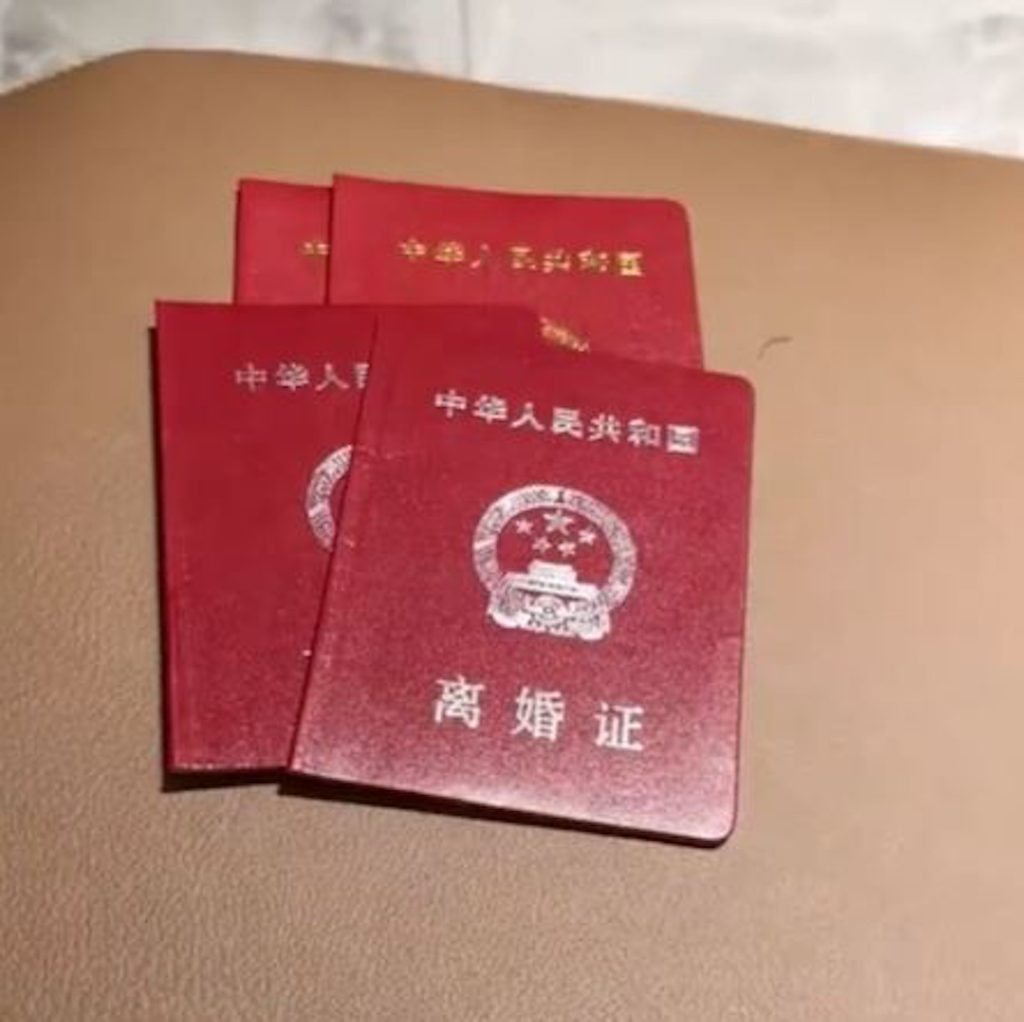
Korean Custody Order Translation to English for Overseas Use
If you need a Korean custody order translation to English for immigration, school enrollment, or consular filing, the hardest part is usually not the translation itself. It is building the right Korean document packet first. In South Korea, the core rules are national, not city-specific: you usually need a certified copy of the family-court order, and many overseas reviewers also want proof that the order is final, plus family-register records that link the parent and child.
This is why Korean custody cases get delayed abroad. Parents often translate only the main court order, or they rely on Korea’s official English family certificate even though the Korean court system itself explains that the English certificate is a separate format with limited data and no child information. For custody or visitation matters, that shortcut can create a rejection risk.
Key Takeaways
- For South Korea family-court custody or visitation paperwork, the real issue is usually packet completeness, not just translation quality.
- The official English Family Relations Certificate is often the wrong shortcut for custody cases because it does not show children. The Korean court system says so directly in its English guidance: Family Register Office for Overseas Koreans.
- If the overseas receiver wants a final custody order, you may need the court decision plus a Certificate of Finality, sometimes a service certificate, and not only the judgment or ruling.
- Apostille authenticates the Korean court document. It does not replace the English translation. For Korean court documents, the apostille route runs through the court-side system shown on apostille.go.kr.
Who This Guide Is For
This guide is for parents using South Korean family-court custody or visitation papers outside Korea. Most readers are Korean parents, former spouses in cross-border families, or overseas Koreans who already have a Korean court judgment, ruling, or order and now need to submit it to an immigration agency, school, consulate, or other foreign authority.
The most common language pair is Korean to English. The most common packet is a Korean court order plus an English certified translation, often with one or more of these supporting documents: a Certificate of Finality, a service certificate, a Detailed Family Relations Certificate, a Detailed Basic Certificate, and sometimes a Detailed Marriage Relations Certificate or divorce record. The most common stuck situations are simple: the receiving authority asks for proof that the custody order is final, the parent only has the main Korean order, or the Korean family-register records do not fully show the foreign parent or child.
Why This South Korea Topic Is Different From a Generic Translation Page
This is not a generic certified-translation article with Korea added to the title. In South Korea, three local realities drive the whole workflow:
- The court record, family-register, and apostille systems are nationally standardized, so the real local friction is document retrieval and cross-border logistics, not fifty different local rules.
- Korea’s official English family certificate is not a literal English version of the detailed Korean family-register certificate and does not include children, which matters directly in custody cases.
- Mixed-nationality families can discover that the Korean register does not answer every overseas proof-of-relationship question, so a custody translation request often expands into a multi-document packet.
What Usually Goes Wrong First
The first mistake is assuming that any Korean court paper with a translation will work. Overseas reviewers often want the operative order and the status of that order. If your document set does not clearly show who has custody, what visitation rights exist, and whether the order is final, the translation can be perfectly accurate and still not solve the filing problem.
The second mistake is using the official English Family Relations Certificate as a shortcut. The Korean court guidance is explicit: the English certificate is a new type of certificate, not a translation of the standard Korean certificate, and it contains no child data. The same page also warns that countries do not treat the English certificate the same way, and it specifically notes that USCIS wants the Korean detailed certificate with translation instead of the English certificate. That makes this one of the most important South Korea-specific pitfalls in this topic.
Korean Custody Order Translation to English: The Packet That Usually Works Better
For most overseas custody or visitation filings, start with the Korean source packet, then translate the whole packet that actually proves your position.
- Main family-court document (판결문 / judgment, 결정문 / ruling, or another order): this is the core custody or visitation decision.
- Certificate of Finality (확정증명원): add this if the receiver asks for a final order or proof that the decision is effective.
- Service certificate (송달증명원): add this if the receiving authority wants evidence of service or notice.
- Detailed family-register records: commonly a Detailed Family Relations Certificate (가족관계증명서 상세) and sometimes a Detailed Basic Certificate (기본증명서 상세) or Detailed Marriage Relations Certificate (혼인관계증명서 상세).
- English certified translation for every Korean document you plan to submit.
The exact mix depends on the overseas use. Immigration officers often want a cleaner documentary chain than schools do. Schools may focus on decision-making authority and parental consent. Consular cases may focus on custody authority plus identity and family relationship. But the practical lesson is the same: translate the packet the foreign reviewer will actually assess, not just the first Korean paper you happen to have.
How to Get the Korean Documents Before Translation
South Korea handles this mostly through national court and family-register systems. The U.S. Department of State reciprocity schedule for South Korea says court records are generally available from the court where the record is maintained, in person or by mail, with a fee of about KRW 1,000 per record: South Korea Reciprocity Schedule. That fee is low. The real cost is time, especially if you are already abroad and need certified copies from the original court.
For Korea-side filing and retrieval, the official court workflow starts with the court system itself. The court portal at scourt.go.kr is the main official entry point, and the electronic civil-service system at ECFS is the practical online node many applicants use when they are still in Korea or working through a Korea-based helper.
- Identify the exact Korean court document you have. A custody case may involve a 판결문, a 결정문, or another family-court order.
- Ask whether the receiving authority needs proof that the order is final. If yes, request the Korean 확정증명원 too.
- If you also need to prove family relationship, retrieve the correct Korean detailed family-register certificates instead of defaulting to the English certificate.
- Only after the Korean packet is complete should you finalize the English certified translation package.
If you are outside Korea, the retrieval stage is usually the slowest part. That is where many deadlines slip. A translation service can move quickly once the Korean packet exists, but it cannot fix a missing finality certificate or a missing family-register record.
Why the Official English Family Certificate Often Fails in Custody Cases
This is the main counterintuitive point in the whole article: the official English certificate can be less useful than the Korean detailed certificate plus translation. On the court’s English page, the Family Register Office for Overseas Koreans explains that the English certificate does not show children and that the information is limited. For custody matters, that limitation is often fatal because the receiving authority is trying to verify a parent-child relationship and decision-making authority, not just the applicant’s name and spouse data.
For U.S. immigration-related review, this is not just a theoretical issue. The Korea family-register guidance itself says USCIS requires the Korean certificate of registered matters in detailed form with translation instead of the English certificate. If your case involves immigration, read this together with CertOf’s related guide on Korean family relation certificate translation for USCIS.
When Apostille Matters, and When It Does Not Replace Translation
Apostille and translation solve different problems. Apostille confirms the authenticity of the Korean public document. Translation makes the Korean content readable to the overseas reviewer. You may need one, the other, or both, depending on the foreign authority.
For Korean court documents, use the official Korean apostille system at apostille.go.kr. If the destination country is a Hague Apostille Convention member and the receiving authority asks for apostille, you generally apostille the Korean court document itself. Then you attach the English translation packet. Whether the English translation also needs Korean notarization is a separate destination-side question.
That is why this article does not tell every reader to buy Korean notarized translation automatically. In many immigration and administrative cases, a proper certified translation with a translator’s accuracy statement is the key requirement. If you need a refresher on that distinction, keep the explanation short here and use the deeper pages on certified vs. notarized translation and USCIS certified translation requirements. In Korea, the local term many families will hear is 번역공증, but that is not the universal default for every overseas filing.
Translation Standards That Matter in Korean Family-Court Documents
Korean custody and visitation orders are not simple one-line certificates. They often contain procedural language, operative paragraphs, seal references, dates of effect, case numbers, and terminology around parental authority, visitation, or restrictions. A usable English version should translate the full content you are submitting and clearly preserve stamps, signatures, page numbers, and seal notations rather than silently dropping them.
For most overseas uses, a practical translation package should include:
- A complete translation of every submitted Korean page.
- A translator certification or accuracy statement.
- Consistent spelling of names across the court order, family-register records, passports, and any school or immigration forms.
- Visible treatment of seals, handwritten notes, margin stamps, and page numbering.
If you are handling a U.S. filing, CertOf’s guides on whether the original document is needed with a certified translation and divorce decree translation to English cover the generic parts that do not need to be repeated here.
How the Workflow Changes by Overseas Use
Immigration: This is usually the strictest scenario. Expect closer review of finality, parent-child relationship proof, and consistency across supporting civil documents. The U.S. Embassy Seoul supplement, updated January 2, 2026, is a useful benchmark for how Korean civil documents are actually expected in a live consular setting.
School enrollment: Schools often care about who can enroll the child, sign consent forms, or move the child internationally. They may not use immigration terminology, but they still need the same underlying proof. A clear English packet can reduce back-and-forth with admissions or safeguarding staff.
Consular or administrative use: These cases often combine authority and identity questions. If the child or the other parent is a foreign national, you may need additional non-Korean civil records such as a birth certificate translation because the Korean register may not answer every foreign agency question by itself.
Local Reality: Wait Times, Cost, Mailing, and Scheduling
For this topic, the core rules are national. The biggest South Korea-specific variation is not legal standard but logistics. Court retrieval and family-register retrieval run through national systems, but your actual timing still depends on where the original court record is held and whether you are applying from inside or outside Korea.
- Document fees are often modest. Court-record fees can be around KRW 1,000 per record on the reciprocity schedule.
- The slow part is usually getting the Korean certified copy from the court, not translating it.
- If you are overseas, mailing, identity verification, and missing case numbers can create the longest delay.
- If apostille is required, that adds a separate official step before your packet is truly submission-ready.
So the realistic advice is simple: collect the Korean source packet first, confirm whether apostille is needed, then place the English translation order.
Common Rejection Risks
- Translating only the main order and skipping the finality document.
- Submitting the official English family certificate instead of the Korean detailed certificate plus translation.
- Using inconsistent English spellings for the child, parent, or former spouse across the packet.
- Assuming apostille makes English translation unnecessary.
- Buying a Korea-side notarization bundle even when the receiving authority only needed a standard certified translation.
What Public User Reports Add to the Official Rules
Official sources should drive the rules, but public user reports help explain where families actually get stuck. In public USCIS discussions on Reddit, Korean applicants repeatedly describe RFEs and confusion when the wrong Korean certificate version was filed or when the English certificate was treated as if it were a full substitute. On VisaJourney, public posts show the same pattern: detailed Korean civil records and full English translation matter more than shortcuts.
These reports do not override official rules, but they point to the same practical lesson as the court and State Department pages: overseas reviewers care about the right Korean source documents first.
South Korea Data Points That Actually Matter Here
- The Korean court system’s English guidance says the English Family Relations Certificate has no child data. That single fact explains a large share of custody-packet failures abroad.
- The U.S. Embassy Seoul supplement was updated on January 2, 2026. That matters because Korean civil-document handling rules do get clarified over time, and custody-related packets are highly detail-sensitive.
- Court-copy fees can be low while cross-border retrieval time is high. For this topic, delay risk is driven more by logistics than by document price.
Commercial Korea-Based Providers for Special Cases
The table below is not a ranking. It lists Korea-based businesses with publicly visible websites, contact details, and Korea-side handling of translation, notarization, or apostille. They are most relevant if you specifically need Korea-based notarization or apostille coordination in addition to translation. For standard USCIS, school, or consular submissions, a normal certified translation is often enough, so a local Korean 번역공증 package is not automatically necessary. These businesses are not official court partners, and their public websites do not by themselves prove deep custody-order specialization.
| Provider | Public facts | Best fit | Use with caution |
|---|---|---|---|
| KICPC / Global Minwon | Website lists Translation & Notarization, Apostille, Embassy Attestation. Address shown as 131, Toegye-ro, Jung-gu, Seoul. Phone: +82-70-7468-0735. | Korea-side document handling when you need more than translation alone. | Confirm family-court document experience and exact treatment of finality certificates before paying. |
| ApoGlobal / Gongin | Website lists translation, notarization, and apostille handling. Jongno center address shown as 3F, 50 Jong-ro 1-gil, Jongno-gu, Seoul. Phone: +82-2-525-6773. | Cases where you want an in-Korea office that markets one-stop paperwork support. | Useful for apostille-heavy cases, but not automatically necessary if the receiver only needs certified translation. |
| QuickApostille | Website lists Seoul address at #305, 266 Seocho-daero, Seocho-gu, Seoul. Phone: +82-2-522-0690. Publicly advertises online reception and apostille support. | Korea-side apostille routing and document legalization workflows. | Ask first whether your destination really requires notarization or apostille on top of translation. |
Official and Public Resources
| Resource | What it helps with | What it does not do |
|---|---|---|
| Family Register Office for Overseas Koreans | Explains family-register certificates, English certificate limits, and overseas-facing family-register processes. | It is not a translation provider and it does not turn your court order into English. |
| Korean Court Portal | Official court entry point for court information, civil-service channels, and locating the right court system path. | It does not replace destination-country filing rules. |
| apostille.go.kr | Official apostille route for Korean public documents, including court-side pathways. | Apostille does not replace certified translation. |
Fraud Prevention and Complaint Paths
Be careful with high-fee Korea-side agents who sell a bundled translation, notarization, and apostille package without first asking what the overseas receiver actually needs. For many routine immigration or school submissions, the right path is a complete English certified translation of the correct Korean packet, not every possible extra certification.
If you believe a Korea-side service misrepresented an official process, start with the official court portal and the relevant court’s civil-service channels. For broader government petition or complaint filing, South Korea’s multilingual public petition system is available through e-People. Use complaint channels for process misconduct. Use a translation provider only for translation and document preparation.
How CertOf Fits
CertOf is strongest in the document-preparation part of this process: translating Korean family-court orders and related Korean civil records into English, providing a certificate of accuracy, preserving seals and formatting cues, and delivering a clean digital packet quickly. That is often the most efficient route once you already have the Korean source documents.
CertOf is not a court runner, not a Korean legal representative, and not an apostille office. If you still need the Korean court copy or apostille itself, handle that through the official Korean channels first. Once your Korean packet is ready, you can upload and order certified translation online, compare delivery formats in this guide to PDF, Word, and paper delivery, and review hard-copy options in our guide to mailed certified translations. When you are ready, you can submit documents directly at translation.certof.com.
FAQ
Is translating the Korean court order alone usually enough?
Often no. If the overseas authority wants proof that the order is final, you may also need the Korean 확정증명원 and its English translation.
Can I use the official English Family Relations Certificate instead of translating the Korean detailed certificate?
Usually no for custody-related proof. The Korean court’s English guidance says the English certificate does not include children and has limited information, which is exactly why it often fails in custody cases.
Does a Korean custody order always need apostille?
No. Apostille depends on the destination country and the receiving authority. But when apostille is required, it authenticates the Korean public document, not the English translation by itself.
Do I always need Korean notarized translation?
No. Many receiving authorities only need a proper certified translation with a translator’s accuracy statement. Korean 번역공증 is a special-case requirement, not the universal default.
What if the other parent or child is a foreign national and the Korean register is incomplete?
That is a common cross-border family issue. You may need extra non-Korean civil documents, including a birth certificate translation, to prove family relationship even if your Korean court order is clear.
Can CertOf get my court record from the Korean court?
No. CertOf can translate and prepare the English packet once you have the Korean source documents. Court retrieval and apostille stay with the official Korean channels or a separate Korea-side service provider.
Disclaimer
This guide is general information, not legal advice. The right document set depends on the foreign authority reviewing your case. When the receiving authority gives document instructions, follow those instructions first, then translate the exact Korean packet they require.
CTA
If you already have your Korean court order, finality certificate, or family-register records and need a clean English submission packet, CertOf can help with the translation stage: complete Korean-to-English certified translation, certificate of accuracy, revision support, and digital delivery built for immigration, school, and consular paperwork. Start your order at translation.certof.com.