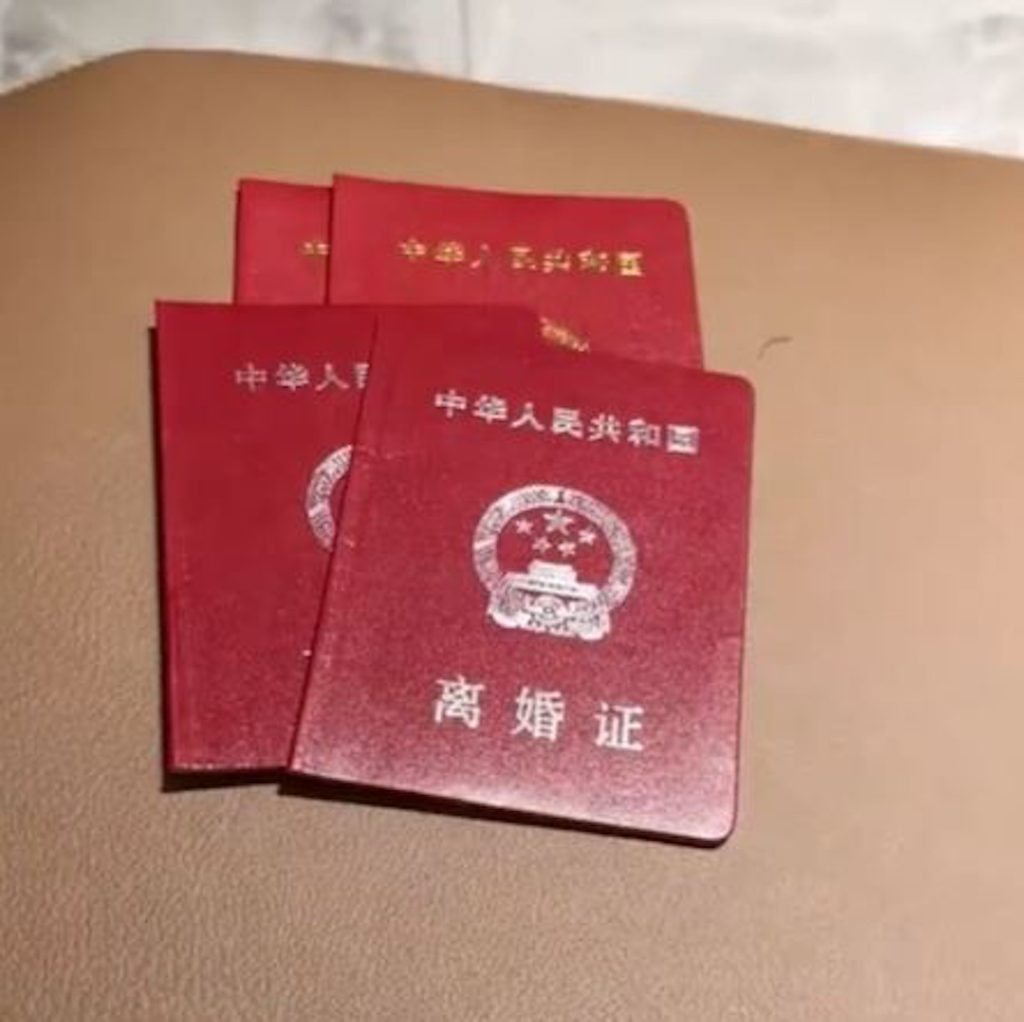
Using a Foreign Custody or Divorce Order in South Korea: Korean Translation Before Filing
If you already have a foreign divorce decree, custody order, parenting order, or visitation order and now need to use it in South Korea, the first question is not which translator to hire. The first question is which Korean path you are entering. In South Korea, a foreign family judgment may be relevant for a family-register update, for a new family-court filing, or for enforcement. Each route creates a different translation package and a different risk profile.
This guide focuses on the narrow issue most families get wrong: how foreign divorce or custody orders are usually received in Korean family proceedings, and what kind of Korean translation pack is safest to prepare before filing.
Key Takeaways
- South Korea does not treat every foreign family order the same way. A foreign divorce used for family-register reporting at a local Gu-office or through a Korean consulate is not the same thing as a foreign custody or visitation order you want enforced in Korea.
- The core legal filter is South Korea’s foreign-judgment recognition standard under Civil Procedure Act Article 217. If you need actual enforcement in Korea, a separate Korean court step may still be required under Civil Execution Act Article 26.
- In Korean official guidance, the practical term is usually a Korean translation, or han-geul beonyeongmun, not a US-style certified translation label. Translate the full filing pack, not just the final page of the judgment.
- The documents that most often delay a filing are not the order itself, but the proof that the judgment is final and the proof that the other side was properly served or appeared.
Disclaimer: This is general information, not legal advice. Recognition, enforcement, and jurisdiction questions in cross-border family cases are fact-sensitive. If the order is contested, urgent, or tied to child abduction or wrongful removal issues, speak with a Korean family lawyer before you file.
Who This Guide Is For
This guide is for people dealing with cross-border family orders anywhere in South Korea: foreign parents living in Korea, Korean nationals returning after overseas divorce or custody litigation, and mixed-nationality families who already hold a foreign court order and now need to use it at a local Gu-office (gucheong, 구청), through a Korean consulate, or in a Korean family-court setting. The most common working language pair is English to Korean, but the same filing problem also appears with Japanese, Chinese, Vietnamese, and other languages. Typical document bundles include the foreign judgment, certificate of finality, proof of service or appearance, child birth records, passports or Korean ID records, and sometimes Korean family-register documents. The usual problem is not just translation accuracy. It is knowing which Korean procedure you are entering, and translating every supporting document that procedure actually depends on.
Start With the Route, Not the Translation
The most useful Korean distinction is this: are you mainly trying to report a status change, or are you trying to make a foreign order do work inside Korea?
1. Family-register reporting for a foreign divorce
For foreign divorce reporting, the Korean judiciary’s overseas family-register guidance is unusually concrete. It lists the foreign judgment, proof that the judgment became final, proof of service or proof that the defendant responded, and Korean translations of those documents as the core package. The official English guide from the Family Register Office for Overseas Koreans is the best starting point because it shows that Korea does not look only at the divorce decree itself.
In practice, people in Korea usually think about this as a Gu-office or family-register counter problem first, while people outside Korea often start through a Korean consulate or the overseas family-register route. The paperwork logic is the same: Korea wants a complete documentary trail, not a decree-only packet.
This is the first counterintuitive point for users: in Korea, the missing document is often not the decree. It is the finality document or service document that proves the foreign process was real and complete.
2. Recognition and enforcement inside a Korean court
If you need more than a status update, for example recognition of custody-related terms in a live Korean family dispute, or enforcement of obligations that require Korean judicial action, the legal analysis becomes stricter. South Korea’s recognition standard for foreign judgments is set out in Article 217. In plain English, Korea looks at jurisdiction, service or appearance, public policy, and reciprocity. If you are asking for actual enforcement in Korea, Article 26 of the Civil Execution Act matters because foreign judgments are not simply self-executing on arrival.
That is why a foreign custody order that feels complete in the US, UK, Canada, or Australia may still need a Korean court step before it can do anything practical inside Korea.
What Goes Into the Korean Translation Filing Pack?
If your goal is to avoid a delay, build the translation pack around what the Korean reviewer must verify, not around what feels most important to you emotionally. In most real cases, that means translating:
- the full foreign judgment or order, including custody, parental authority, visitation, and support sections if they are relevant to the Korean step you are taking;
- the certificate of finality or equivalent proof that the decision is no longer provisional;
- proof of service on the other party, or proof that the other party appeared and defended the case;
- all stamps, seals, signatures, handwritten annotations, and attachments that help the Korean office verify authenticity or procedure;
- identity documents and Korean civil-status documents if the Korean filing requires them;
- name-bridge material if the same person appears under different romanization, married names, or passport spellings.
If you only translate the operative paragraph and leave out annexes, court seals, or proof-of-service pages, you create the exact problem that causes many Korean filings to stall. For broader court-document formatting issues, keep the explanation short here and use our related guide on certified translation for court proceedings.
Does South Korea Require Certified Translation, Notarization, or Self-Translation?
The safest answer is this: South Korean official guidance is usually framed around attaching a Korean translation, not around hiring a translator from a national certified-translator roster. The official family-register guidance linked above speaks in terms of Korean translations of the required documents. That makes certified translation a bridge term for international readers, not the most natural Korean filing term.
In practice, three levels exist:
- Basic Korean translation: the core requirement in official guidance for family-register style submissions.
- Translator statement or identity-backed translation package: sometimes useful where a receiving office wants to know who prepared the translation.
- Notarized translation: not a universal national rule for every family filing, but sometimes used in higher-friction cases, complex foreign judgments, or when a clerk wants a more formal document trail.
For a narrow comparison between certified and notarized translation concepts, use our separate explainer on certified vs. notarized translation. Do not let that generic distinction take over this Korea-specific filing guide.
As a practical rule, self-translation is a bad default for this topic. The legal problem is not just language. It is terminology mapping. English words like custody, legal custody, physical custody, and visitation do not map neatly unless the Korean package is drafted with Korea’s family-law vocabulary in mind, clearly distinguishing between legal custody (chin-gwon, 친권) and physical custody (yang-yuk-gwon, 양육권).
A second Korean-specific friction point is desk discretion. Even when the official rule focuses on a Korean translation, a complex foreign judgment may still push a filing desk to ask for more formality. In real Korean workflow, that often means hearing requests for notarized translation (beonyeok-gongjeung, 번역공증) or for help from an administrative attorney (haengjeongsa, 행정사). That is not the same thing as a universal national requirement, but it is a real reason to prepare the pack carefully before you appear in person.
A Practical South Korea Workflow Before You File
- Decide whether you are reporting a foreign divorce for family-register purposes, preparing for a Korean family-court filing, or trying to enforce a foreign order in Korea.
- Collect the whole foreign file, not only the judgment. If there is a finality certificate, service affidavit, proof of response, apostille, or legalization page, collect that now.
- Sort the terms that matter in Korean: divorce status, parental authority, physical custody, visitation, child support, and any restrictions or conditions.
- Prepare a complete Korean translation pack that mirrors the original file and keeps names, dates, case numbers, and child details consistent across every page.
- Before you spend money on a formal Korean court move, use a low-cost or free help node to confirm the route. In South Korea, that often means the immigration contact center at 1345 or the judiciary’s foreigner support portal.
If your case is simple and the goal is a status update, translation is the main bottleneck. If your case is contested or you need enforcement, translation is only the preparation layer.
Real Korean Friction Points
The filing problem is often procedural, not linguistic
Foreign parents often assume the main document is the order itself. Korean reviewers often care just as much about whether the order is final and whether the other side received proper notice. That is why incomplete translation packs fail even when the judgment translation is excellent.
Official language support is real, but limited
The Korean judiciary’s Judicial Information for Foreigners and Immigrants explains that guide and interpretation support exists, but users should not confuse front-desk help with full hearing representation or guaranteed courtroom interpretation. That distinction matters in child-custody litigation.
Do not assume every office uses US-style translation wording
If you walk into this topic searching only for certified translation wording, you can miss what the Korean office is really asking for. In Korea, the more natural search and filing language is often Korean translation attached, Korean translation document, or notarized translation only where the receiving body wants more formality.
Country-wide rules dominate, but local handling still creates friction
This topic is mainly controlled by national law and judiciary guidance, not by city-specific custody rules. The local difference usually shows up in workflow friction: how formal the filing desk wants the translation package to look, whether you need a lawyer for the Korean court phase, and how quickly you learn that the missing document is the proof-of-service page rather than the decree.
Free Help, Complaint Channels, and Language Support
- 1345 Immigration Contact Center: useful for foreign residents who need orientation, language support, and a first checkpoint before hiring paid counsel. Official information is available through the Ministry of Justice.
- JIFI: useful for court-process explanations and language-access guidance. Start with the judiciary’s foreigner support portal at JIFI interpretation guidance.
- Korea Legal Aid Corporation (KLAC): if the issue is no longer document preparation but an actual contested Korean court move, low-cost or free help may be available through Korea Legal Aid Corporation (KLAC). In Korea, the main phone line is 132.
- Korea Consumer Agency / 1372 foreign-consumer channel: if a Korea-based translation or document-preparation vendor overcharges, misrepresents notarization, or delivers a defective pack that creates a filing problem, use the Korea Consumer Agency’s foreign-language consumer help page at KCA for Foreign Consumers. The dedicated foreign-language hotline is 043-889-5400.
What Kind of Provider Fits Which Problem?
| Provider type | Best for | What it can realistically do | Where it stops |
|---|---|---|---|
| Remote document-translation provider such as CertOf | Families who already know the Korean filing route and need a clean, complete Korean translation pack | Translate judgments, finality certificates, service records, annexes, seals, and name-bridge documents; keep terminology consistent; prepare digital delivery and revisions | Does not decide recognition strategy, court jurisdiction, or enforcement tactics |
| Korea-based notarization or administrative-document route | Cases where the receiving office wants a more formal local paper trail or in-person handling | Add local formality through notarization or a locally prepared package | Not a substitute for legal advice on whether Korea will recognize or enforce the foreign order |
| Korea-based expat family-law counsel | Contested custody, visitation, support, jurisdiction, or enforcement problems | Advise on Article 217 issues, Korean family-court steps, and enforcement strategy | Usually more expensive than simple translation and unnecessary for routine document-only preparation |
That structure reflects the Korean market more honestly than pretending there is one nationwide roster of officially certified family-order translators.
Local Signals That Matter
- The Korean judiciary publishes separate foreigner guidance and language-access information. That alone tells you this is a recurring real-world filing problem, not a rare edge case.
- The official 1345 immigration contact center supports multilingual users, which matters because the first failure in these cases is often route confusion, not translation quality.
- The Korea Consumer Agency has a foreign-consumer channel because foreign residents do run into vendor and documentation disputes in Korea’s service market.
Those are not decorative facts. They explain why a cautious translation-first workflow matters in South Korea: the system expects paperwork discipline, but the support ecosystem also assumes that many users will arrive confused about where their foreign family order fits.
User-Side Reality Checks
Across expat community discussions, practitioner FAQs, and Korea-facing family-law intake pages, the same patterns repeat:
- people translate only the order, not the procedural support documents;
- people assume a foreign custody order can be shown directly to a Korean authority and immediately enforced;
- people confuse front-desk language help with full courtroom support;
- people spend money on notarization before confirming whether their Korean route actually needs it.
These patterns are useful because they tell you where to spend effort first: route confirmation, full-document collection, terminology mapping, and only then formal packaging.
FAQ
Will South Korea accept a foreign divorce judgment automatically?
Not in a simplistic sense. Korea applies foreign-judgment recognition rules under Article 217. For family-register reporting, the judiciary’s official guide shows the supporting documents Korea expects. For enforcement or contested court use, an additional Korean court step may still be necessary.
Do I need a certified translation or just a Korean translation?
For this topic, the more natural Korean requirement is usually a Korean translation of the relevant documents. Certified translation is a useful bridge term for international readers, but not the core Korean filing term. Notarization may be useful in some cases, but it is not the best default assumption for every filing.
What documents should I translate besides the custody or divorce order itself?
Usually the judgment, finality proof, service or appearance proof, annexes, seals, signatures, and any identity or civil-status documents tied to the Korean filing. If the Korean reviewer must rely on it, translate it.
Can I reuse one translation pack for different Korean steps?
Often yes, if the pack is complete and terminology-consistent. But the safer approach is to match the pack to the exact Korean use: family-register reporting, court recognition, or enforcement. Reuse is most efficient when the first pack was prepared as a full record rather than a decree-only translation.
Is my foreign divorce judgment void if I miss the 1-month reporting deadline in Korea?
No. Korean family-register guidance states that a divorce report should be made within one month after the foreign judgment becomes final. Filing late can still create an administrative penalty issue at the reporting desk, but it does not erase the foreign judgment itself. The practical problem is delay and extra paperwork, not automatic invalidity. For the reporting framework, start with the Family Register Office for Overseas Koreans guide.
What if a translation vendor in Korea gives me the wrong product?
Use the Korea Consumer Agency’s foreign-consumer support channel at KCA for Foreign Consumers or call 043-889-5400. If the deeper issue is legal route confusion, contact 1345 or a Korean family lawyer instead of simply buying a second translation.
Related Guides
- Certified Translation for Court Proceedings, Depositions, and Exhibits
- Certified Translation of a Divorce Decree
- Certified vs. Notarized Translation
- How to Upload and Order a Certified Translation Online
- Revision Speed and Money-Back Guarantee for Certified Translation
- Certified Translation With Mailed Hard Copies
CTA
If you already know your Korean route and need the document pack prepared correctly, CertOf can help translate the full file, not just the headline judgment page. That includes seals, signatures, annexes, finality records, service records, and name-bridge documents, with consistent terminology across the whole package. If you are still unsure whether your next step is family-register reporting, recognition, or enforcement, confirm the route first, then order the translation that fits the Korean filing you are actually making.