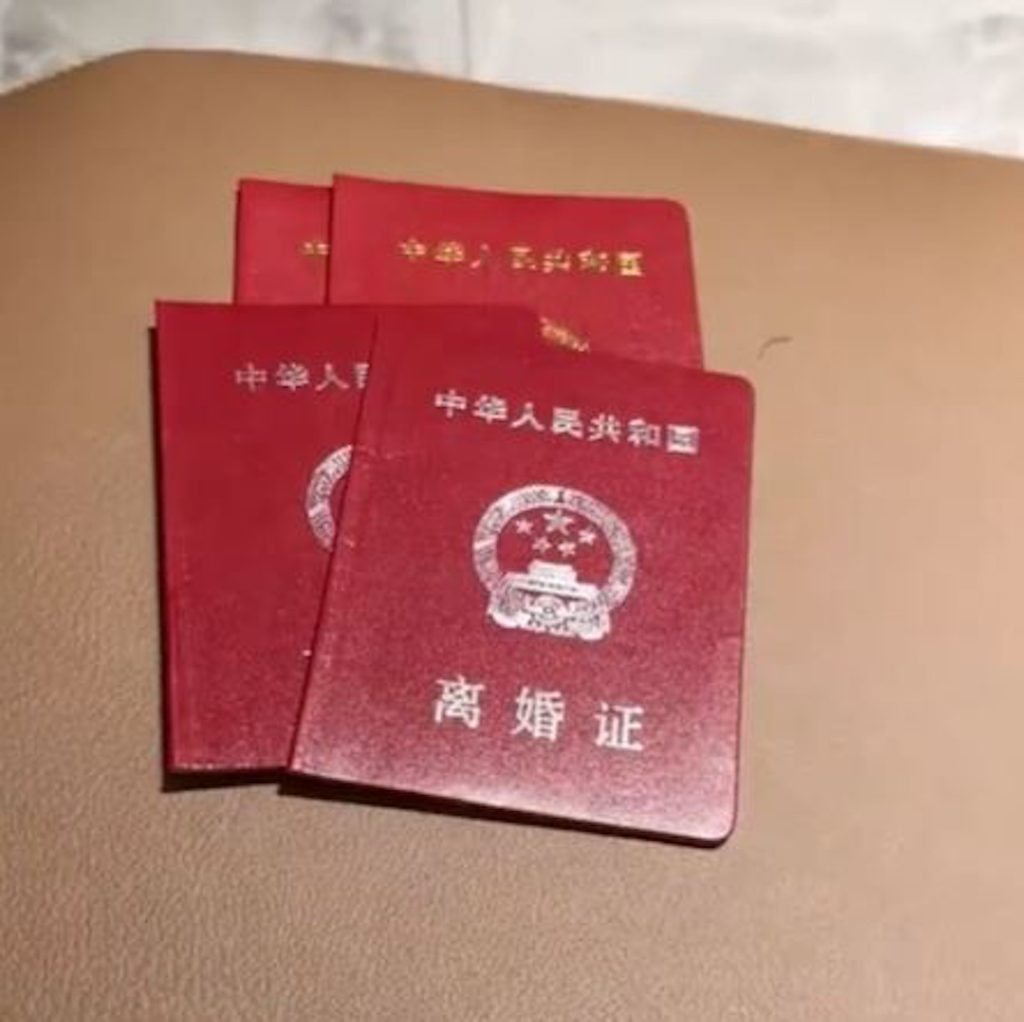
Tamil Nadu Divorce Judgment English Translation: When You Need It for Name Change Records
If you are dealing with a Tamil-language divorce judgment from Tamil Nadu, the real problem is usually not whether translation exists. It is whether your next institution can read the document you already have, and whether that institution also expects a court-certified copy, a Gazette publication, or another record-update step. In that setting, a Tamil Nadu divorce judgment English translation can be essential, but it is only one part of the document chain.
This guide explains when an English certified translation helps, when it does not, what should be translated in full, and how the translation fits into the real workflow for passport changes, record updates, Tamil Nadu Gazette publication, and overseas use.
Disclaimer: This is a document-preparation guide, not legal advice. Court procedure, name-change disputes, and cross-border acceptance questions can turn on facts specific to your case. CertOf can help with document translation and certified translation delivery, but not with court filings, Gazette publication, or agency decisions.
Key Takeaways
- In Tamil Nadu, lower-court judgments and orders commonly appear in Tamil because the state official-language framework allows Tamil in subordinate courts. That is why this issue comes up here more often than in some other states. See the Tamil Nadu Official Language Act background.
- A court certified copy and an English certified translation are not the same thing. The first proves the source document came from the court. The second helps a non-Tamil reviewer understand it.
- For Tamil Nadu Gazette publication after divorce, the state printing department says a duly certified copy of judgment copy must be enclosed for name change due to divorce. It also gives the filing address, payment window, and enquiry contacts on its official page: Tamil Nadu Stationery and Printing Department.
- Translation does not replace Gazette publication, Aadhaar exception processing, Passport Seva document rules, or PAN proof of name change. It is a language bridge, not a legal substitute.
Who This Guide Is For
This guide is for people in Tamil Nadu, India who have already completed a divorce and now need to use a Tamil-language divorce judgment, decree, or court-certified copy for post-divorce name change or record updates.
- You may be reverting to a maiden name, deleting a spouse name from a passport, aligning Aadhaar, PAN, bank, HR, or insurance records, or sending divorce papers to a foreign consulate, immigration authority, school, or employer.
- The most common language pair here is Tamil to English.
- The most common document set is a Tamil court judgment or decree, a court-certified copy, old-name identity documents, and sometimes a Tamil Nadu Gazette publication.
- The most common mistake is using the wrong source document, translating only the final page, or assuming the English translation can replace a Gazette step or agency-specific proof requirement.
Why This Problem Is So Local to Tamil Nadu
This is not a generic India page with a state name inserted. The local issue starts with the court-language environment. Tamil Nadu’s subordinate-court framework has long supported the use of Tamil, which is why a family-court judgment, decree, or order may be fully or largely in Tamil even when the next reviewer is not. That local mismatch creates the translation need.
The second local feature is the Gazette workflow. The Tamil Nadu government printing department publicly states that for change of name due to divorce, a duly certified copy of judgment copy must be enclosed. The same page gives the filing address at 110, Anna Salai, Chennai 600002. The department’s forms page also publishes the name-change forms in both English and Tamil, and the Gazette archive shows that change-of-name notices are published in both Tamil and English. Those are highly local workflow details, not generic certified-translation advice.
Counterintuitive point: in Tamil Nadu divorce name-change cases, the first bottleneck is often not translation. It is proving that you have the right source document in the first place.
What an English Certified Translation Does and Does Not Do
An English certified translation helps when the person reviewing your divorce record does not read Tamil. That may include:
- Passport staff reviewing a divorce-based surname or spouse-name update packet
- HR, banking, insurance, university, or compliance staff outside Tamil-language workflows
- Foreign immigration, consular, remarriage, or background-check reviewers
But the translation does not perform any of these functions:
- It does not turn an uncertified photocopy into a court-certified copy.
- It does not create a Gazette name-change record.
- It does not guarantee Aadhaar, PAN, bank, or passport approval.
- It does not replace apostille, legalization, or notarization if a foreign destination separately asks for those.
If you need a broader explanation of translation labels, keep that section short and use an internal reference such as Certified vs. Notarized Translation.
Which Source Document Should You Translate?
In this scenario, users commonly mix up five different items:
- Judgment: the court’s reasons and findings
- Decree or final order: the operative result
- Court-certified copy: the court-issued authenticated copy
- Gazette publication: the state name-change notice, if obtained
- English translation: the language bridge for the above
For downstream English use, the safest default is usually to translate the court-certified copy of the operative divorce record, not a casual scan and not only the conclusion page. If your packet includes both a longer judgment and a separate decree, the right answer depends on what the receiving institution wants to verify.
- If the reviewer only needs proof that the divorce was granted and on what date, the decree may be central.
- If the reviewer needs to trace names, procedural history, or specific findings, the fuller judgment may matter.
- If you are building a post-divorce name-change chain, the Gazette publication and old-name identity records may also need to travel with the translated judgment or decree.
For the general document issue itself, see Certified Translation of Divorce Decree to English. If your problem is broader than translation scope and you are actually trying to map the local filing path, see post-divorce name change in Chennai.
Full Translation vs. Partial Translation
For Tamil divorce judgments, partial translation is where many avoidable problems begin.
A reviewer may need more than the final paragraph. Critical facts are often scattered across multiple pages:
- court name and case number
- names as recorded by the court
- date of judgment and date of decree
- references to marriage registration or prior documents
- judge signature, seal, endorsement, or copy-certification text
- remarks, annexures, or handwritten notes on the certified copy
If your goal is only to translate a short extract for your own understanding, a partial translation can be fine. If your goal is submission to a downstream institution, a full certified translation is usually the safer move. That is especially true for passport, immigration, remarriage, and cross-border use.
Where Translation Fits in the Real Workflow
- Get the right court document. If you do not yet have the final decree or a court-certified copy, solve that first.
- Decide whether you also need a name-change record. In Tamil Nadu, the Gazette route matters for many post-divorce identity updates. The state’s own proforma for name change due to divorce requires a duly certified copy of judgment. See Proforma-1E.
- Translate for English-language downstream use. This is the point at which an English certified translation becomes useful.
- Submit to the target institution. Passport, Aadhaar, PAN, employer, insurer, bank, or foreign authority each reviews through its own rule set.
- Keep one stable document set. Reusing the same clean translation package reduces later mismatch problems.
Downstream Institutions: What Usually Matters
Passport Seva
The Ministry of External Affairs document advisor says that in reissue cases involving marriage, divorce, and separation:
- for deletion of spouse name, submit a Divorce Order/Decree
- for change of spouse name, submit a Divorce Order/Decree or death certificate of first spouse, plus remarriage proof where applicable
- for a change of surname following divorce, submit the Divorce Order/Decree if the surname change is based on divorce
See the official Passport Seva document advisor. The site does not use the phrase certified translation here, but when your decree is in Tamil, the practical issue is whether the reviewing staff can clearly read the record. That is where English translation becomes useful. Translation helps the reviewer understand the record. It does not replace the decree itself.
Aadhaar
UIDAI says demographic updates matter because Aadhaar is used across banking, insurance, education, employment, healthcare, taxation, and other services. See Updating Data on Aadhaar. UIDAI also states that name can normally be updated twice, and beyond that point a Gazette notification for name change is required, together with supporting documents such as a divorce decree in the exception path. See the FAQ entry My request for name update rejected as limit exceeded.
This is one of the clearest places where translation has a limited role. A Tamil-to-English translation may help if your document is being reviewed outside a Tamil language context, but it does not eliminate the need for the underlying name-change path that UIDAI applies.
PAN
PAN correction rules are national rather than Tamil Nadu-specific. The PAN correction instructions say that a significant change in name must be supported by proof of the name change in addition to proof of identity. For married women, the examples include marriage certificate, invitation card, Gazette publication, or passport showing spouse name. For other individuals, publication of name change in Gazette is the listed proof. See Instructions for Filling Change Request Form.
That means translation can support readability, but PAN logic still revolves around proof of the change itself.
Tamil Nadu Gazette Publication
This is the strongest state-specific node in the chain. The Tamil Nadu Stationery and Printing Department states:
- for change of name due to divorce, a duly certified copy of judgment copy must be enclosed
- the filing address is Assistant Director (Publication), Commissionerate of Stationery and Printing, 110, Anna Salai, Chennai-600002
- for change of name and payment, the public window runs on working days from 10:00 a.m. to 1:00 p.m. and 2:00 p.m. to 3:00 p.m.
- the public service page lists enquiry numbers including 044-2852 0038, 044-2854 4412, 044-2854 4413, and 044-28544414
See Services to Public and Proforma-1E. For a state-level reference page, this is the local workflow that matters most.
Local Cost, Timing, and Filing Reality
- The Tamil Nadu public page lists name-change publication charges and the filing window. The current proforma also says publication charges are accepted via e-challan for in-person filing. See Proforma-1E.
- The department states on its public page that applications received Monday to Friday are being published on the next Wednesday as a service goal. Treat that as a department target, not as a universal guarantee. See Services to Public.
- The same proforma says Gazette printing mistakes can be corrected within six months. After that, correction requests will not be entertained. That makes proofreading important before you rely on the published notice. See Proforma-1E.
- UIDAI says normally 90% of update requests are completed within 30 days, but document validation still controls the outcome. See Updating Data on Aadhaar.
- We do not have a strong statewide official source for one uniform certified-copy turnaround time across Tamil Nadu family courts, so it is better not to promise one.
Pitfalls That Cause Delays
- You translated a scan, but the institution actually wanted the court-certified copy.
- You translated only the last page, leaving out seals, certification text, or case details.
- You assumed the translation could replace the Tamil Nadu Gazette step.
- You used different name formats across the decree, Gazette notice, Aadhaar, PAN, and passport packet.
- You forgot that mixed Tamil-English pages still need a coherent English version for a foreign or non-Tamil reviewer.
- You published a Gazette correction with a typo and missed the six-month correction window stated in the state proforma.
What Local Users Keep Running Into
Two patterns show up repeatedly in practical discussions, although they are not official rules.
- On r/LegalAdviceIndia, users discussing surname reversion after divorce describe Aadhaar centres insisting on Gazette publication even when the applicant already has a divorce decree. Treat that as a community signal, not a binding rule.
- Commercial compliance guides for post-divorce name change in India repeatedly frame the workflow as decree plus Gazette plus downstream updates, not decree alone. That is broadly consistent with the official Tamil Nadu Gazette materials and with UIDAI’s exception-path wording, but those guides are still commercial summaries rather than primary authority.
The useful lesson is not that every office behaves the same. The lesson is that a translation package works best when the underlying proof chain is already stable.
Public Support and Complaint Paths
| Resource | What it can help with | Official signal |
|---|---|---|
| Tamil Nadu Stationery and Printing Department | Gazette publication for name change due to divorce, publication enquiries, fee and filing process | Official public page |
| Tamil Nadu State Legal Services Authority | General legal assistance if your issue is really a court-document or legal-aid problem rather than a translation problem | Contact page |
| Passport grievance route | Escalation if a passport document-handling issue is getting stuck | PIB Chennai grievance note |
Fraud Risk: Keep the Roles Separate
Post-divorce name-change work attracts middlemen because the workflow spans court records, Gazette publication, ID updates, and translation. The safest way to avoid preventable fraud is to separate the functions clearly:
- The court provides the certified copy.
- The Tamil Nadu Gazette system publishes the state notice if you need that route.
- The translation provider handles language conversion and certification wording for the translated file.
- The agency itself decides whether your update request is accepted.
If your issue is with Gazette publication, use the official department contacts on the public service page. If your issue is with Aadhaar, use UIDAI’s complaint and grievance links from its update page. If your issue is with passport processing, start with the official passport route and the Chennai grievance note in the PIB release.
How CertOf Fits
CertOf is most useful here once you already have the right source document and know where it is going next. In this scenario, CertOf’s role is to prepare a clean Tamil-to-English certified translation of the divorce judgment, decree, or court-certified copy for downstream use.
- We can help with full-document translation rather than risky excerpt-only translation.
- We can preserve seals, signatures, dates, case numbers, and formatting cues that matter for submission.
- We can deliver digital files suitable for repeat use across multiple institutions.
We do not replace the court, Gazette office, Aadhaar centre, or Passport Seva. If you need the translation itself, start here: submit your documents securely. If you want to see how online ordering and digital delivery work, see Upload and Order Certified Translation Online and Electronic Certified Translation: PDF vs Word vs Paper.
FAQ
Do I need an English certified translation for a Tamil Nadu divorce judgment?
You often do when the receiving institution is not operating in Tamil. Translation is most useful for Passport Seva review, foreign use, non-Tamil HR or compliance review, and cross-border name or marital-status updates.
Is a court certified copy the same as a certified translation?
No. A court certified copy proves the source came from the court. A certified translation helps another reader understand that source. Many applicants need both.
Should I translate the full divorce judgment or only the last page?
For submission use, full translation is usually safer. Important facts can sit outside the last page, including case number, certification text, court name, dates, seals, and signatures.
Can an English translation replace the Tamil Nadu Gazette step?
No. If your name-change route requires Gazette publication, the translation does not replace it. Tamil Nadu’s own Gazette materials require a duly certified copy of judgment for name change due to divorce.
Will Aadhaar or PAN accept the translation by itself?
No. Aadhaar and PAN decisions still depend on their own proof requirements. Translation can improve readability, but it does not replace the required underlying name-change documents.
Final Word
The most useful way to think about this issue is simple: first fix the proof chain, then fix the language problem. In Tamil Nadu, that usually means confirming the correct decree or certified copy, deciding whether the Gazette step is part of your path, and then ordering a full English certified translation that matches the source exactly.
If you already have the court document and need a clean Tamil-to-English certified translation for downstream use, you can upload your file to CertOf. If you are still unsure whether to translate the decree, the judgment, or both, send the documents first and identify the institution you are submitting to. That avoids paying for the wrong scope.