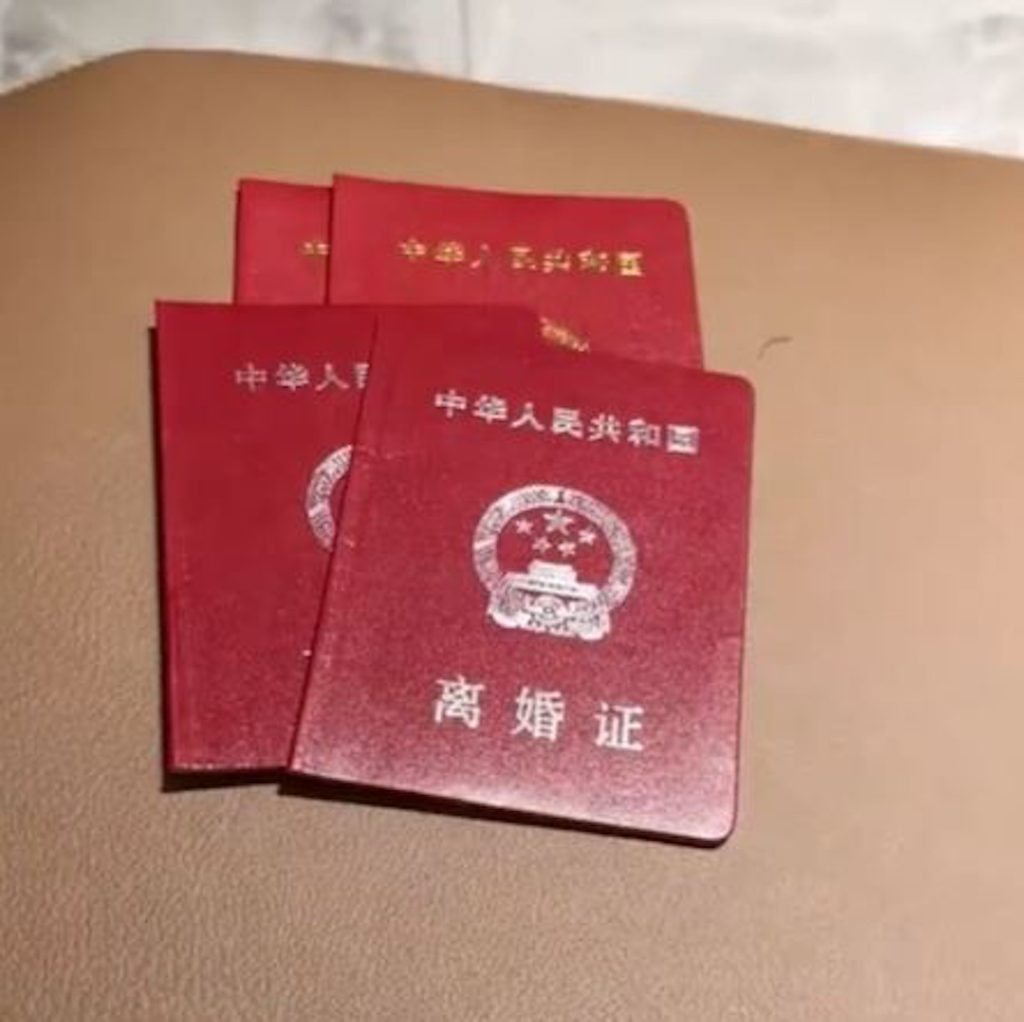
Tolyatti Child Custody Cases With Foreign Documents: Notarized Russian Translation Guide
If you are handling a child custody dispute in Tolyatti with a foreign birth certificate, divorce record, passport, or overseas court paper, the hard part is usually not translation alone. Families often have to solve three problems at once: which district guardianship office handles the case, whether the foreign document package is usable in Russia, and whether the Russian translation is in the form local institutions actually expect.
This guide is about child custody and parenting-rights disputes with foreign documents. It is not a full adoption guide. That difference matters because ordinary custody disputes usually stay inside Tolyatti’s district-level system, while some adoption matters follow a different path.
Key Takeaways
- Tolyatti does not run one single child-custody intake point. The city routes families by district through the Department of Guardianship and Wardship of Tolyatti, with separate routing for Avtozavodsky and for Central/Komsomolsky.
- The English phrase certified translation is only a bridge term here. In this setting, the practical requirement is often a notarized Russian translation or a translation whose translator signature is notarized. Russia’s court rule for foreign documents appears in Civil Procedure Code Article 408.
- A counterintuitive point: many families think the court is the first stop. In reality, the local guardianship route is often what determines whether the case starts smoothly or turns into weeks of preventable delay.
- Tolyatti’s real friction is local: district split, phone confirmation, guardianship review timing, and the risk of rebuilding the packet if apostille, legalization, page order, or translation format is wrong.
Who This Guide Is For
This guide is for people living in Tolyatti, Samara Oblast who are trying to resolve a child custody, parenting-time, or child residence dispute and need to use foreign-language documents inside the local Russian process. The most common readers are cross-border families, divorced or separated parents, remarried parents, and Russian residents holding non-Russian civil records. The most common language pair is English to Russian, although the real issue is broader: any non-Russian birth certificate, marriage or divorce record, passport page, school record, medical record, or foreign court order can trigger the same problem. The typical situation is simple but stressful: you have the documents, but you do not know which Tolyatti office handles your district, whether the papers need apostille first, and whether your translation is acceptable in a local custody case.
Why Tolyatti Cases Feel Different Even Though the Core Rule Is National
The core document rule is mostly federal, not city-specific. Russia’s family and civil procedure rules control how foreign documents are used, and Tolyatti does not have a separate city-level translation law for custody cases. The local difference is operational: district routing, local office access, and document-handling reality.
At the national level, Russian family law is centered on the child’s interests, reflected in the Family Code of the Russian Federation. At the local level, what families usually feel first is not theory but workflow: which office to call, where to go, whether the guardianship authority has enough to review, and whether the translation packet is usable.
That is why this article keeps the national rule short and puts the local workflow first. If you need a general primer on translation terminology, see Certified vs. Notarized Translation. If your case turns into a recognition issue for an overseas family judgment, compare the logic in our guide on foreign custody and divorce orders. If you are still deciding what kind of digital packet to prepare, use this guide to electronic certified translation formats.
Tolyatti District Routing: Where Families Usually Start
Tolyatti’s guardianship system is routed by district. The city administration lists the main local contacts on its official page for guardianship and wardship. In practice, this is the routing problem many families hit before they even think about translation quality.
| Local node | What it matters for | Publicly listed details |
|---|---|---|
| Avtozavodsky district guardianship office | District-level intake and case handling for families in that district | Novyy proezd, 2; phone listed by the city as +7 (8482) 54-44-29 on the official Tolyatti page |
| Central and Komsomolsky district guardianship routing | Main route for families in those districts | Bulvar Lenina, 15; city-listed phone +7 (8482) 54-30-26 on the same municipal page |
| Department leadership / escalation | Useful when you need to escalate a practical access problem or confirm who handles your matter | Bulvar Lenina, 15, room 76, according to the department information page |
The first practical lesson is simple: do not build the translation packet in a vacuum. Confirm which district path you are on first. That reduces the risk of taking a complete file to the wrong office and then discovering that a different district office or judge wants a slightly different packet order. Because reception windows can change, phone confirmation before travel is still sensible even when the address is clear.
What the Guardianship Authority Actually Does
In a Tolyatti custody dispute, the guardianship authority is not a side character. It is part of the real decision path. Families usually need the local authority to review the situation, look at the document package, and participate in the process before the court can move comfortably on a child-related dispute. That is why foreign-document problems become local workflow problems so quickly.
For a beginner, the practical rule is: if your custody case depends on a foreign birth certificate, foreign divorce record, foreign school letter, or overseas court paper, assume the guardianship review and the court filing should be prepared as one coherent Russian-language packet rather than as separate last-minute tasks.
Tolyatti Child Custody Notarized Translation: What Usually Has To Be Translated
For a custody dispute involving foreign documents, the most common translation set includes:
- the child’s foreign birth certificate;
- marriage or divorce records for the parents;
- passport identity pages and, where relevant, residence-status pages;
- a foreign custody order, parenting plan, or court judgment;
- school letters, medical records, or other child-related evidence;
- supporting evidence such as consent letters, housing records, and communications.
In Russia, the user-facing phrase certified translation is often too vague. For official use, families usually need a Russian translation in a notarized format, often described locally as notarized Russian translation or нотариально заверенный перевод. The formal national rule on foreign documents in court is not unique to Tolyatti; that is why this article only summarizes it. If you want a broader breakdown of document authentication logic, compare our document-authentication custody guide.
What matters locally is the sequence. If the original foreign document also needs apostille or another form of legalization, translating too early can waste money. Families often save time by confirming the document chain first, then building a Russian packet designed for local use.
How the Local Process Usually Works
- Identify the district route. Start with the correct Tolyatti guardianship office for your district. This is the local node most likely to slow you down if you guess wrong.
- List every foreign document that could affect the child’s status. Birth, marriage, divorce, identity, school, medical, and prior court records are the usual starting set.
- Check document readiness before you order the final translation. If apostille or another legalization step is still missing, resolve that first where applicable.
- Prepare a Russian notarized translation packet. In many real-world cases, this is the format local institutions expect, not a bare translator statement.
- Use the packet for guardianship review and then for court filing. Tolyatti custody disputes commonly move through district-level courts, with public court pages for the Avtozavodsky District Court of Tolyatti, the Central District Court, and the Komsomolsky District Court.
- Keep a clean master file. One of the most common avoidable problems is losing track of which version went to the guardianship office, which version was notarized, and which version was scanned for filing or later re-use.
Local Court, Filing, and Scheduling Reality
Tolyatti families often expect the court phase to be the only hard part. It usually is not. The local practical issues are earlier: district routing, document preparation, and the time needed for the guardianship authority to review the file and issue its position. That is why a foreign-document case can feel slower than a purely domestic file even before a hearing date matters.
For filing, the city’s district courts publish their own public pages, including addresses and contact information. A local reality that matters for foreign-document users is that electronic filing may be less forgiving than in-person review when the packet contains originals, translations, notarization pages, and legalized attachments. Families who submit scans often need to make sure the packet order is clean and readable. When the packet is messy, the practical result is not necessarily a final rejection; it is often delay, confusion, or a request to fix the file.
Exact wait times are not published in one simple Tolyatti source for custody cases involving foreign papers, so the safe planning assumption is to leave extra time for district confirmation, translation, notarial steps, and any local review activity that supports the guardianship opinion.
Common Local Failure Points
- Going to the wrong district office first. This creates needless delay and can force you to re-explain the case from scratch.
- Using the wrong translation standard. Many families assume a plain certified translation is enough because that phrase is common in English. In this setting, notarized Russian translation is often the practical requirement.
- Translating before checking legalization. If apostille or another authentication step still needs to happen, you may end up paying twice.
- Mixing packet versions. Court, guardianship review, and later civil-record use do not always work smoothly if pages are missing, re-ordered, or only partly translated.
- Treating adoption and custody as the same workflow. They are not. This guide stays with custody because the court path, document load, and local routing are different.
What Local Users Seem To Run Into in Practice
Official rules tell you what should happen. Public user-facing signals help explain why cases feel harder on the ground.
- Official and quasi-official signals: the city’s own guardianship pages show how much depends on the correct district route and on the Bulvar Lenina, 15 municipal node. That alone explains why first-time users often waste time before their document package is even reviewed.
- Lawyer Q&A and family-dispute commentary: a recurring practical theme is that foreign divorce or custody paperwork is not useful until it is converted into a Russian-ready packet with the right formalities. This is a reality check, not a substitute for the law.
- Local translation-market signals: public bureau websites and local business listings suggest that users often care less about literal translation quality than about whether the document set is accepted by the local notarial workflow. Treat this as a market signal, not as an official rule.
The important point is not that every public comment is correct. It is that the same practical complaints repeat: wrong district, missing apostille, and a translation that is linguistically fine but operationally unusable.
Public Resources and Complaint Paths
If the problem is access, routing, or administrative inaction, you may need a public support path rather than another translation revision.
| Public resource | When it helps | Public signal |
|---|---|---|
| Tolyatti guardianship department leadership reception | When you need to escalate a district-routing or access problem | Bulvar Lenina, 15, room 76 on the department page |
| State Legal Bureau of Samara Oblast | When you qualify for free legal help and need basic guidance on family-law paperwork | Current institution website: urburo63.ru; confirm the Tolyatti access point before travel |
| Samara Oblast Prosecutor internet reception | When you believe a child-rights or administrative-inaction complaint needs escalation | Official online complaint channel: Prosecutor’s internet reception |
Use these resources for access and rights problems, not as a substitute for translation preparation. If the core defect is still your document packet, escalation will not fix it.
Local Translation Providers
For most families, the most useful provider is not the one making the biggest marketing promise. It is the one that can handle personal civil documents cleanly, explain the notarial workflow, and work from a consistent packet. Publicly visible local options include:
| Commercial provider | Publicly visible local signal | What it may fit | Important limit |
|---|---|---|---|
| Slovo Bureau of Translations | Public local presence tied to Tolyatti listings and website contact details, including ul. Voroshilova, 17 and phone +7 (8482) 490-335 | Basic civil-document translation and local notarial workflow | Public presence is not proof of child-custody specialization; confirm family-document experience before ordering |
| Meridian Translation Agency | Public website lists Tolyatti offices, notarization-related services, and phone +7 (8482) 63-18-69 | Document packets that need translation plus notarial follow-through | Published service pages are general consumer pages, not a guarantee of court-specific custody expertise |
These are commercial options, not official recommendations. Their value is local presence and publicly visible notarial-translation service signals, not any public proof that they are uniquely approved by Tolyatti courts or the guardianship authority.
Why This Is a Tolyatti Problem, Not Just a Russia Problem
- The city is split across major districts. That directly affects where families go first and why routing mistakes are common.
- One municipal node matters a lot. Bulvar Lenina, 15 appears repeatedly in the city’s child-and-family administration structure, so a document problem often turns into a repeat-visit problem.
- The same foreign-paper issue can hit multiple local stages. A birth certificate or divorce record that is not prepared correctly can slow the guardianship route first and the court route next.
That is why a generic Russia-only translation guide is not enough for this situation. The document rule may be national, but the wasted time is local.
How CertOf Fits Without Overpromising
CertOf fits best in the document-preparation stage. That means helping you build a clean translation packet for foreign birth records, divorce records, passports, school records, medical records, and supporting evidence before you bring the file into the local Russian process. It does not mean legal representation, court filing on your behalf, official appointments, or an official city endorsement.
If you need help organizing a remote order, start here: how to upload and order certified translation online. If you need a digital packet first and paper later, compare PDF, Word, and paper delivery options. If your priority is revision handling and quick fixes after an office asks for changes, see revision and turnaround guidance. If you later need paper delivery, review hard-copy delivery options.
Cost and Timing Reality
There is no single official Tolyatti price schedule for a foreign-document custody packet, because the total cost depends on the number of documents, legalization needs, notarial steps, and how many times the packet is reused. Local bureaus publicly advertise notarized translation services, but published retail prices are general consumer prices, not a reliable budget for a live custody dispute.
The more useful planning advice is this:
- budget for translation and notarial handling, not translation alone;
- leave time for district confirmation and guardianship review;
- avoid paying twice by checking whether legalization must happen before the final translation order;
- keep one master digital file so you can respond quickly if the office asks for a clearer or re-ordered packet.
FAQ
Do I need a notarized Russian translation for a foreign birth certificate in a Tolyatti custody case?
In many real cases, yes. The practical local standard is often a notarized Russian translation, not just an English-style certified translation. If the document is foreign, also check whether legalization or apostille must come first.
Which guardianship office in Tolyatti handles my case?
It depends on your district. Tolyatti’s municipal guardianship structure publicly lists separate routing for Avtozavodsky and for Central/Komsomolsky on the city administration website.
Can I file first and translate later?
That is risky. If the foreign document is central to the case, waiting on translation can slow both the guardianship review and the court stage. Build the usable Russian packet early.
Is a U.S. certified translation enough for Tolyatti?
Often no. That is the most common misunderstanding. In this setting, the question is not whether the translation is certified in an American sense, but whether it fits the Russian notarial and official-document workflow.
Can I use the same translation for the Tolyatti guardianship office and the district court?
Often yes, but only if the packet is complete and well organized. Families run into problems when one set is missing notarization pages, attachments, the legalized original, or a clean page order.
What if my problem is really adoption, not custody?
Then you should not rely on this article alone. Adoption and custody do not follow the same path, and some adoption matters involving foreign applicants move beyond the ordinary local district-court workflow.
Disclaimer
This guide is for practical information only and does not create a lawyer-client relationship. Family-law outcomes depend on the child’s interests, the court record, and the exact status of each foreign document. Translation preparation can remove a major filing barrier, but it does not guarantee a custody result. When the dispute involves recognition of a foreign judgment, parental-rights termination, or another high-conflict issue, get case-specific legal advice in Russia.
CTA
If your Tolyatti custody case depends on foreign civil records, the safest next step is to prepare the document packet before you start bouncing between offices. CertOf can help you turn birth certificates, divorce records, passports, school records, and other non-Russian documents into a clean translation package for local review. You can start with CertOf’s online order form, review how the upload process works, and use revision support guidance if an office later asks for a formatting change.