Court-Ready Translation for Foreign-Language Evidence in U.S. Civil Lawsuits
If you are preparing court-ready translation for foreign-language evidence in a U.S. civil lawsuit, the biggest risk is usually not that your translation looks unofficial. The bigger risk is that the packet is incomplete, poorly mapped to the original, or overclaims what the translator can prove. In the United States, there is no single national sworn-translator system for civil exhibits. What matters is whether the judge and the other side can follow the evidence, challenge it fairly, and trust that the English version matches the source.
Disclaimer: This guide is general information, not legal advice. Evidence strategy, admissibility disputes, and local filing requirements can change by court, judge, and case posture. If your case is contested or high-value, confirm your filing strategy with your attorney or the court’s instructions.
Key Takeaways
- In U.S. civil litigation, there is no one nationwide “court-certified translation” format for every exhibit. The practical standard is accuracy, completeness, traceability, and a defensible translator statement.
- The most common failure point is not lack of notarization. It is incomplete translation: cropped screenshots, missing stamps, untranslated side notes, broken exhibit numbering, or a summary standing in for the full document.
- A translator can usually certify that the English translation is accurate and that they are competent in both languages. That certification does not prove the original is authentic, unedited, or complete.
- For federal filings, electronic filing is routine through CM/ECF, and courts publish court-specific filing details through PACER and CM/ECF resources. Your clerk’s office is a filing gatekeeper, not a translation service.
Who This Guide Is For
This guide is for people in the United States dealing with a civil lawsuit who need to prepare foreign-language evidence for a motion, filing, deposition exhibit, or trial packet. It is especially useful for self-represented litigants, paralegals, litigation support staff, and small legal teams handling mixed-language records.
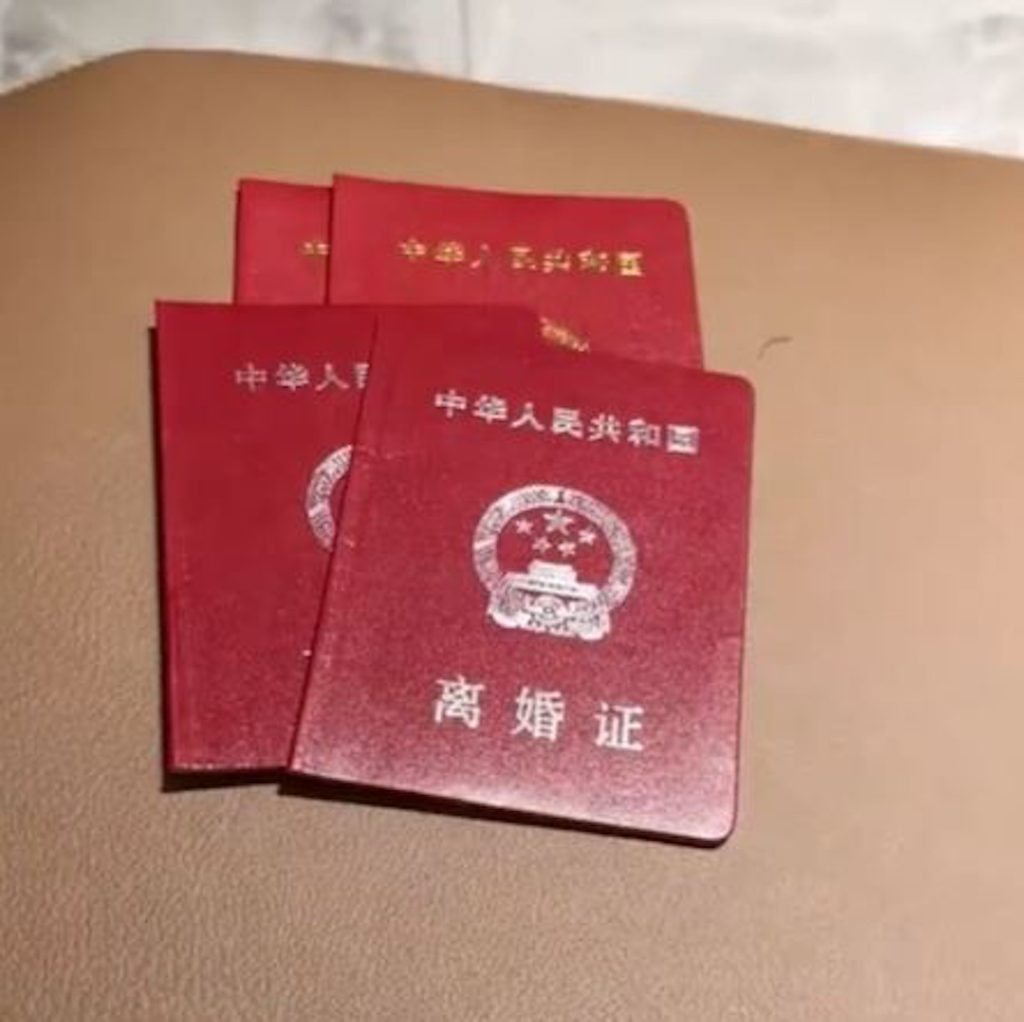
The most common language pairs in this setting are Spanish-English, Chinese-English, Portuguese-English, Russian-English, Korean-English, Arabic-English, and Japanese-English. Common document sets include contracts and amendments, invoices, bank records, chat screenshots, emails with attachments, handwritten notes, medical records, identity records, and company documents. The people who struggle most are the ones trying to decide whether they can translate only the “important parts,” whether screenshots need full treatment, and whether a translator’s certificate solves authenticity problems by itself.
Why This Is a U.S. Evidence Problem, Not Just a Translation Problem
American courts care about foundation. Under Federal Rule of Evidence 901, the party offering evidence must support a finding that the item is what the party claims it is. That is why foreign-language evidence is rarely just a language issue. It is an authentication issue, a formatting issue, and often a sequencing issue.
There is also a second U.S.-specific confusion point: people mix up live court interpretation with written exhibit translation. Federal Rule of Evidence 604 governs interpreters in proceedings and requires a qualified interpreter to give a true translation. That does not mean the court will prepare your written exhibits for you. If you need a clearer explanation of that split, see our guide on interpreter vs. document translation in U.S. civil lawsuits.
Counterintuitive but important: in many U.S. civil disputes, the decisive problem is not “Did you hire a certified translator?” It is “Can everyone tell exactly which original text the English version corresponds to, line by line and page by page?”
What Court-Ready Translation Means in U.S. Civil Lawsuits
In practice, a court-ready translation for foreign-language evidence usually has five features:
- Complete: it translates all material text needed to understand the exhibit, not just the part that helps your position.
- Mapped: the translation is easy to match to the original exhibit, screenshot, or page sequence.
- Readable: timestamps, headers, stamps, margin notes, handwritten text, and attachments are handled in a way a judge and opposing counsel can actually follow.
- Qualified: the translator states competence in the relevant language pair and certifies accuracy.
- Limited: the translator statement stays in its lane and does not pretend to authenticate the source document or prove who wrote it.
If you need a general overview of exhibit-ready court translation workflow, keep that separate from this narrower evidence-standard question and use this related court proceedings guide as background only.
What Usually Needs to Be Translated
For U.S. civil evidence packets, the safest default is to translate everything a reader would use to interpret meaning, context, sequence, or reliability. That often includes:
- the full text of contracts, amendments, invoices, receipts, ledgers, and bank records;
- email bodies, subject lines, sender fields, recipient fields, and attached document labels;
- chat messages, timestamps, usernames, group names, forwarded-message indicators, edits, deletions, and captions;
- stamps, seals, handwritten comments, annotations, table headers, page numbers, footer text, and back-page text;
- labels such as “signature,” “seal,” “illegible,” or “blank page” when those features matter to the record.
If a section is unreadable, the translation should say so plainly, for example with a notation such as [illegible], instead of guessing. If part of the packet is intentionally untranslated because the parties agreed to excerpts, say that clearly and keep the scope narrow and explicit.
How the Real Workflow Usually Looks
- Identify the exhibits that will actually matter. Discovery production and trial-use preparation are not the same thing. A document may exist in the case file long before it is prepared for motion practice or trial use.
- Check the court’s local rules and the judge’s own practices. Federal and state baseline rules do not remove local variation. Some courts are stricter on affidavit wording, filing format, or exhibit labeling than others.
- Build an exhibit map before translating. Decide what Exhibit A, A-1, A-2, or Bates range each source file belongs to. This step prevents later confusion more than any certification language does.
- Translate the packet in the same order a neutral reader will review it. That means preserving page sequence, attachment sequence, and screenshot order.
- Add a translator certification that proves accuracy, not more than accuracy. The certificate should support the translation without pretending to authenticate the underlying evidence.
- File or exchange the packet in the format your forum expects. In federal court, CM/ECF is the normal route, and each court sets its own PDF-size and technical rules through CM/ECF guidance.
One reason U.S. users get caught off guard is that electronic filing sounds simple. It is not. Courts can accept filings electronically while still rejecting or challenging attachments that are unreadable, oversized, badly sequenced, or impossible to compare to the source. PACER’s filing guidance makes clear that courts use CM/ECF broadly and that court-specific PDF limits and procedures still matter.
State Variation Matters More Than Many Users Expect
The core problem is national, but some states make the translation process more procedural. A strong example is Texas Rule of Evidence 1009, which sets out a specific framework for translating foreign-language documents, including service timing, a qualified translator’s affidavit or unsworn declaration, and a mechanism for objections and competing translations before trial.
That kind of rule matters because it shows how U.S. practice actually works: even when there is no nationwide “official translator” register, courts can still demand structure. If your case is outside Texas, do not assume the same deadlines apply. But do assume that judges care about the same underlying risks: accuracy, fairness, and clear notice to the other side.
Completeness Problems: The Most Common Way Translation Fails
Across court opinions, litigation-support commentary, and attorney workflow guides, the repeated failure pattern is incomplete translation. That usually looks like one of these:
- only the “important” page is translated, while the signature page or attachment is left out;
- a screenshot is translated, but the timestamp, sender name, or image caption is not;
- the front of a document is translated, but a handwritten back-page note is ignored;
- a translation paraphrases a chat thread instead of preserving the sequence message by message;
- a summary table is offered where the actual dispute turns on wording, tone, or chronology.
That is why a professionally prepared packet often needs more than just a translator. It needs packet logic: page matching, screenshot numbering, and format consistency.
If your evidence is mostly chat logs or messaging screenshots, use our separate WhatsApp-for-court guide for the format-specific issues. This page is narrower: it explains what makes that translation more likely to be court-ready in a U.S. civil case.
Screenshots, Chats, and Handwritten Notes
These formats cause special trouble in American litigation because they are easy to crop, reorder, and misread. A safer approach is:
- keep each screenshot with a clear exhibit label and source order;
- translate visible metadata such as dates, times, sender names, recipient names, group names, and system notices;
- show whether content was forwarded, edited, deleted, or partially visible on-screen;
- mark non-readable text honestly rather than reconstructing it from context;
- avoid blending multiple screenshots into one English summary unless the original layout is also easy to inspect.
For handwritten notes, side annotations, stamps, and seals, the same logic applies. If a mark helps explain who signed, when something was reviewed, or whether the document carries official processing language, it belongs in the translation. If you are also sorting out the broader question of certification vs. notarization, keep that separate and use this certified vs. notarized translation explainer rather than expanding that topic here.
What the Translator’s Statement Can and Cannot Prove
A translator certification or declaration is useful, but only when it stays within defensible boundaries.
What it can usually support:
- the translator is competent in the source and target languages;
- the attached English text is a true, accurate, and complete translation of the attached source material;
- the translator identifies the source document or source images that were translated.
What it should not claim to prove:
- that the original document is authentic;
- that the screenshot was never altered;
- that the conversation is complete and no messages were deleted;
- that a particular person authored the foreign-language text;
- that the exhibit is admissible for every evidentiary purpose.
This boundary is critical. A translation certificate solves a language problem. Authentication, chain-of-custody issues, and hearsay objections are separate problems.
Timing, Cost, Mailing, and Filing Reality
In the United States, the rule framework is national enough to create familiar patterns, but the operational burden is local. Federal courts use CM/ECF broadly, and PACER explains that filing is available around the clock, while each court sets its own filing details and PDF limits. That means the real-world delay usually comes from packet prep, not courthouse travel.
Three practical consequences follow:
- Wait time: the slow part is often assembling the source files, choosing the right exhibit scope, and revising after counsel review.
- Cost: prices vary widely by language pair, handwriting difficulty, screenshot volume, and formatting complexity. There is no honest national flat rate for litigation translation.
- Mailing: some matters still involve paper courtesy copies, chambers copies, or paper-heavy state practice, but the translation work should usually be prepared in filing order long before printing becomes the issue.
If you need a digital-first ordering path rather than a courthouse-centered process, start with CertOf’s translation portal or read our online ordering guide before you finalize exhibits.
National Provider Options
This is a country-level guide, so the useful comparison is national and role-based, not city-by-city. The main question is not “Who is nearest?” It is “Who can handle evidence packets, certification language, and revision cycles without pretending to give legal advice?”
| Commercial Option | Public Signal | Best Fit | Contact / Location |
|---|---|---|---|
| CertOf | Digital-first certified translation service with layout-preserving workflow and certificate of translation accuracy | Users who need fast document translation, formatting support, revisions, and a court-facing packet for common legal document types | 2500 Wilshire Blvd., Los Angeles, CA 90057; +1 (650) 468-7435; Contact |
| ATA Language Services Directory | National professional directory run by the American Translators Association; not court endorsement, but a useful search tool for language pair and specialty filtering | Users who need to locate an individual translator or agency and want to screen for legal specialization | 211 N. Union Street, Suite 100, Alexandria, VA 22314; +1 (703) 683-6100 |
| All Language Alliance, Inc. | Long-running U.S. legal-translation provider with public emphasis on legal documents, depositions, and handwriting-heavy materials | Specialized or higher-friction legal and historical-document projects where human handling is the priority | Denver, Colorado headquarters; +1 (303) 470-9555 |
If you want CertOf’s delivery terms and revision logic before ordering, see this overview of guarantee, revision, and speed.
Public and Nonprofit Resources
| Resource | What It Helps With | When to Use It First | Public Signal |
|---|---|---|---|
| U.S. Courts / PACER | Federal filing guidance, CM/ECF lookup, and court-specific technical filing information | Before filing federal exhibits or when you need the court’s own electronic filing instructions | National federal court system resource; PACER Service Center publishes help contacts |
| Legal Services Corporation | Civil legal aid referrals and access points for low-income users | If you need help understanding civil procedure or finding legal aid before paying for broad litigation support | 1825 I Street NW, Suite 800, Washington, DC 20006; +1 (202) 295-1500 |
| Federal Trade Commission | Fraud reporting path if a translation seller falsely claims official court approval, guaranteed acceptance, or other deceptive promises | If you believe a provider used deceptive sales claims rather than just delivering poor customer service | National consumer-protection path through ReportFraud |
Fraud and Complaint Paths
In this market, the most suspicious promise is not “fast turnaround.” It is “guaranteed court acceptance” or “official court-certified translator” language presented as if one national civil registry exists. That is not how U.S. civil evidence practice works.
If a seller used deceptive claims, the national complaint path is FTC ReportFraud. If the problem is not fraud but a filing issue, the better next step is usually the court’s own filing instructions, your attorney, or a narrower motion strategy rather than a consumer complaint. Keep those lanes separate.
Why Demand Exists Nationwide
U.S. Census Bureau data show that 23.0% of people in the United States spoke a language other than English at home in the 2024 ACS 1-year estimates. That matters here because foreign-language evidence is not a rare edge case. It shows up in business disputes, family-related civil matters, debt and contract disputes, insurance cases, employment records, and cross-border transactions. In other words, the practical need for high-quality exhibit translation is structural, not exceptional.
Common Pitfalls to Avoid
- Using self-translation in a contested case when neutrality and qualifications can be challenged.
- Submitting only excerpts when context or sequence is likely to matter.
- Treating screenshots like casual images instead of evidence objects with metadata and order.
- Ignoring side notes, stamps, reverse pages, or handwritten additions.
- Letting the translator statement overpromise by speaking to authenticity instead of translation accuracy.
- Waiting until the filing deadline to decide what actually needs translation.
FAQ
Do all foreign-language exhibits in a U.S. civil lawsuit need full English translation?
Not always in every procedural posture, but if you plan to rely on the exhibit in a serious way, full translation is usually safer than partial translation. The more meaning, context, or chronology is disputed, the harder it is to defend a selective excerpt.
Can I submit only the translated parts that support my argument?
You can sometimes narrow scope by agreement or by motion strategy, but selective translation creates avoidable completeness fights. If you take this route, make the scope explicit and make sure the untranslated material does not change meaning.
Do screenshots and chat messages need more than plain text translation?
Yes. Timestamps, participant names, group labels, edits, forwards, and cropped context often matter as much as the message text itself. A clean exhibit map is part of a court-ready packet.
Does notarization make a translation automatically safer for court?
No. Notarization can matter in some forums, but it is not the universal U.S. answer. In many cases, completeness, mapping, and a competent translator statement matter more than a notary stamp.
Does the translator’s certification prove the document is authentic?
No. It supports translation accuracy and translator competence. Authentication of the underlying evidence remains a separate task.
Will the court provide a translator for my written exhibits?
Usually no. Courts may provide or regulate interpretation in some proceedings, but written evidence translation is normally something the parties arrange themselves.
CTA
If you already know which foreign-language exhibits need English translation, CertOf can help you turn scattered source files into a cleaner, court-facing packet with preserved layout, complete translation, and a clear certificate of translation accuracy. Start with the upload portal. If you are still deciding what to translate, keep your litigation strategy with your attorney and use CertOf for the document-preparation side of the workflow, not as a substitute for legal advice.