Dnipro Family Immigration Document Translation: Civil Records, K-1 Paperwork, and the Kyiv Interview Handoff
Disclaimer: This guide is for general information and document-planning purposes only. It is not legal advice, and it does not replace case-specific guidance from the U.S. government, a licensed attorney, or the issuing Ukrainian authority.
Dnipro family immigration document translation is usually not the hardest part of a U.S. spouse visa or K-1 case. In practice, the hardest part is getting the right paper record in Dnipro, checking old surnames and document versions before you travel, and arriving in Kyiv with a packet that will not trigger a preventable correction request. That is why this guide focuses on the real local workflow: get the civil records in Dnipro, translate them into English properly, and then hand the case off in Kyiv for the medical exam and interview.
- Key Takeaways
- For Dnipro applicants, the core rules are mostly national and U.S.-federal. The local difference is logistics: document retrieval in Dnipro, then medical exam and visa steps in Kyiv.
- The most common avoidable mistake is not “bad translation” in the abstract. It is bringing the wrong underlying record, especially a police certificate that is not the FULL / POVNA version with prior names.
- Dnipro DMS states that services stop during air-raid alerts. Build slack into your schedule before you book Kyiv travel.
- Diia can help you order some repeat civil records and extracts online with Ukrposhta delivery, but mailed delivery should not be treated as guaranteed fast.
Who This Guide Is For
This guide is for people living in Dnipro, Dnipropetrovsk Oblast, Ukraine who are preparing a U.S. family-based immigration case or K-1 fiance(e) visa packet, usually with Ukrainian-to-English or Russian-to-English documents. The most common document sets include birth certificates, marriage or divorce records, police certificates, passports, prior-name evidence, child-related records, and relationship evidence. The typical problem is not understanding the petition stage in the abstract; it is getting a usable local paper record, making sure names match across old and current documents, and having English translations ready before the Kyiv medical exam and interview process.
Why Dnipro Cases Feel Different Even When the Rules Are Mostly National
This is not a city with a local U.S. immigrant visa office. U.S. immigrant and K visa processing for Ukrainian citizens and residents has resumed in Kyiv, and the official post page also places the medical exam with the IOM Migration Health Unit, 15 Tarasivska St., Kyiv and the embassy at 4 A.I. Sikorsky St., Kyiv 04112. See the official Kyiv immigrant visa instructions and the Ukraine reciprocity page.
That means the real Dnipro problem is not “which local USCIS office do I use?” There is none. The real problem is that you prepare the file in Dnipro but the high-stakes handoff happens in Kyiv. If you discover a prior-name mismatch, a shortened police certificate, or a missing divorce document only after you travel, the correction cost is much higher.
Counterintuitive but important: many applicants start by asking where to get a certified translation. In this city-level workflow, the better first question is usually: Do I already have the right civil record version in hand?
What Documents Usually Need Attention First
For most spouse visa, parent/child immigration, and K-1 cases from Dnipro, the core packet usually includes:
- Birth certificate
- Marriage certificate
- Divorce certificate or court divorce order, if applicable
- Police certificate
- Passport identity page and sometimes prior passports
- Name-change evidence, including prior surnames
- Children’s birth records, custody papers, or consent documents where relevant
- Relationship evidence for K-1 or spouse cases
For a complete breakdown of U.S. immigration translation standards, you can review our dedicated guides: USCIS certified translation requirements, who can certify a translation for USCIS, K-1 packet translation checklist, and certified English translation for U.S. family immigration.
What “Certified Translation” Really Means in This Ukraine-to-U.S. Context
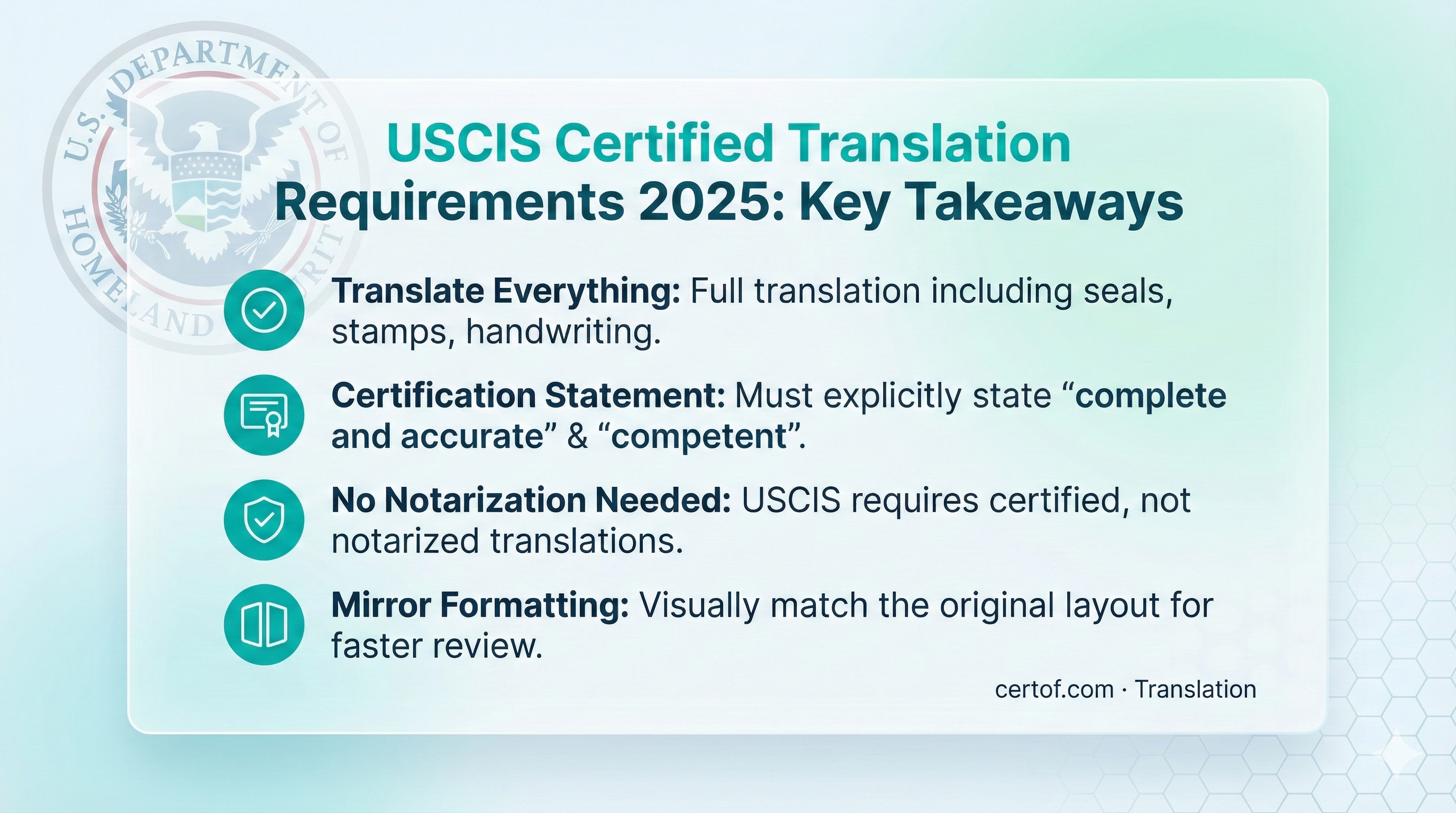
In Dnipro, many applicants naturally search for something closer to “English translation of documents for a U.S. visa” or “notarized translation.” For U.S. family immigration purposes, those are not always the same thing. The U.S. side generally cares about a complete English translation with a translator’s certification statement, not automatic Ukrainian notarization. The Kyiv post instructions and general USCIS practice are the reason CertOf and similar services talk about certified translation as a bridge term.
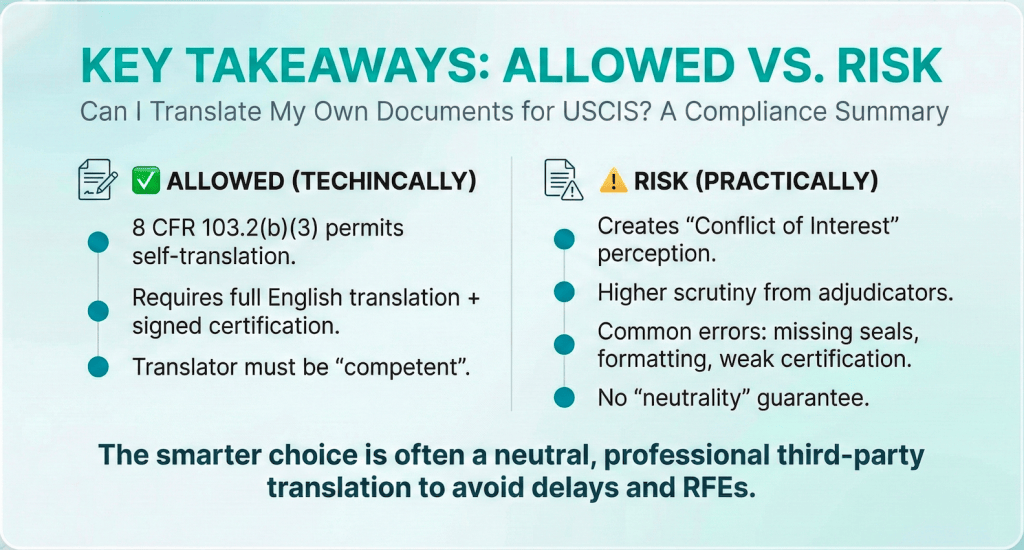
The baseline rules are strict: no self-translation, no machine-only translation, and no partial translation of handwritten notes or stamps. For a fuller background, see our resources on can I translate my own documents for USCIS?, can I use Google Translate for USCIS?, certified vs. notarized translation, and a USCIS certified translation sample.
How to Actually Handle the Dnipro Workflow Before You Go to Kyiv
1. Fix the underlying record first
If your birth, marriage, or divorce paper is old, damaged, missing, or held in another region, start with record retrieval before ordering translation. Dnipro applicants can use local TSNAP and DRATsS channels or, in some cases, Diia’s online ordering and Ukrposhta delivery flow for repeat certificates and extracts.
Relevant local nodes include:
- Dnipro DMS: vul. V. Lypynskoho 7, Dnipro. Hotline: 0 800 50-48-74 and (056) 745-03-70. Office hours published by the agency are Monday to Thursday 08:00-17:00 and Friday to 15:45, with a 12:00-12:45 break, and the office notes that services pause during air alerts. Source: Dnipro DMS.
- Right-Bank TSNAP: vul. Marii Kiuri 5, TRC NEO PLAZA, 2nd floor. Public service network: Dnipro TSNAP portal.
- Left-Bank TSNAP: pr. Slobozhanskyi 31-D.
- Central DRATsS: vul. Sicheslavska Naberezhna 10.
These local addresses matter because this is where many Dnipro applicants solve the boring but decisive part of the case: getting a duplicate, an extract, or a paper record that can actually be translated and carried forward.
2. Check prior names before translation starts
The U.S. State Department’s Ukraine reciprocity page is unusually important here because it makes two issues explicit: police certificates must be the FULL / POVNA version, and prior names matter. If your birth certificate, passport history, marriage record, and police certificate do not line up on names, do not assume the translator can solve the problem alone. You may need a better source document, not just a cleaner translation.
3. Translate before the Kyiv handoff, not after you arrive
Once your local record set is stable, translate the actual packet you will carry into the next stage. That usually means civil records first, then any relationship evidence or supporting documents that are actually being submitted for the current stage. For detailed guidance on handling chat logs, social media posts, and photos, read our guide on relationship evidence translation for U.S. family immigration.
4. Then move to Kyiv for the medical exam and interview steps
The official Kyiv post page is the source to cite when you explain that Dnipro residents must use Kyiv for immigrant and K visa steps, including the IOM medical exam at 15 Tarasivska St. and embassy handling at 4 A.I. Sikorsky St. That is why a Dnipro-focused article should spend most of its time on document readiness, not on generic embassy theory.
Local Wait-Time, Cost, Mailing, and Scheduling Reality
Wait time: there is no reliable city-wide official benchmark for how fast all Dnipro civil-document requests will move. What is verified is that Dnipro DMS pauses service during air alerts, which makes “I will get it done in one day” a weak assumption. For mailed records through Diia and Ukrposhta, treat delivery as a convenience tool, not a guaranteed fast lane.
Medical exam cost: the official Kyiv post page lists IOM medical fees by age band, with public ranges that run roughly from USD 180 to USD 343, depending on age and required items. Source: Kyiv immigrant visa instructions.
Mailing reality: Diia helps reduce local trips, but if you are close to a Kyiv travel date, mailed delivery may not be enough on its own. The practical lesson from applicant experience is to leave buffer time between ordering a replacement record and booking the capital-city handoff.
Scheduling reality: same-day Dnipro-Kyiv round trips are discussed in applicant communities, but that is not an official rule. Treat it as a weak operational warning rather than a hard requirement. If your packet is fragile or you may need last-minute photocopying, corrections, or reprinting, an overnight buffer is usually the safer planning posture.
Local Risks That Cause Expensive Rework
- Wrong police certificate version: the most important police certificate rule for Ukrainian applicants is not optional formatting trivia. The reciprocity page requires the FULL version with prior names.
- Old surname mismatch: if the translation uses a spelling that does not line up with your passport history or earlier record chain, the packet becomes harder to trust.
- Occupied-territory records: if the marriage, birth, or divorce event was registered in a non-recognized authority, you may need a Ukrainian court route before translation can solve anything. Source: Ukraine reciprocity page.
- Waiting too long to replace a paper record: ordering translation first and fixing the source document later often means paying twice.
- Assuming apostille comes first: for most ordinary family-immigration civil records in this Ukraine-to-U.S. scenario, apostille is not the default first move. That is one of the most common misconceptions.
What Local Applicants and Communities Keep Warning About
Official rules control the case. Community experience only helps explain how people actually get stuck. Across Ukrainian visa groups, local TSNAP discussions, and broader immigration forums, three recurring operational warnings show up again and again:
- Local applicants frequently note that bringing a shortened police certificate to the Kyiv interview can trigger additional document requests and an expensive return trip to Dnipro.
- People repeatedly warn each other not to leave prior-name issues unresolved until after travel.
- War-time interruptions and mailing uncertainty make “just fix it later” a poor strategy.
Treat those points as operational caution, not as substitute law. They still matter because they explain why Dnipro applicants should finish record cleanup before the Kyiv trip.
Official and Public Resources First
| Resource | What it helps with | Who it is for | Cost / boundary |
|---|---|---|---|
| Diia | Repeat civil records and extracts, online ordering, mailing support | Applicants who can use Ukraine’s digital channels | Public service; fees are generally low. Use it before paying a private intermediary when your case is straightforward. |
| Dnipro TSNAP / DRATsS network | Paper duplicate certificates and in-person help | Applicants who need physical records or local clarification | Public route; best for source documents, not for U.S. translation compliance itself. |
| Dnipro DMS hotline and e-reception | Complaint path for service delays and migration-service issues | People facing document-service disruption or suspected fake intermediaries | Public complaint route. Hotline: 0 800 50-48-74. E-reception: official complaint channel. |
| U.S. Embassy Kyiv instructions | Medical exam, packet handoff, interview-stage rules | Anyone moving from local prep to the U.S. visa stage | Official U.S. source. Use this for Kyiv-stage facts, not social media summaries. |
Local Commercial and Related Providers: Use Cases, Not Endorsements
The normal path in an ordinary case is still: public record retrieval first, translation second, legal help only if the record itself is disputed or unavailable. That is why the provider module below is framed by use case, not recommendation language.
| Provider type | Public signal in Dnipro | Best fit | Important boundary |
|---|---|---|---|
| De-Lis | Publicly markets Dnipro-facing document help and translation coverage | Applicants who want a paid one-stop service for duplicate retrieval support plus translation | Check current scope before paying. Public marketing is not the same as U.S. government recognition. |
| ukraine-translation.com / pereklad.ua | National providers that publicly accept Ukraine document translation work, including Dnipro-facing orders | Applicants specifically looking for notarized-translation style local service language | Useful only if you understand that U.S. family immigration usually needs translator certification, not automatic local notarization. |
| EkVita / similar local legal offices | Public local-law signal for court and family-document matters | Occupied-territory records, contested divorce paperwork, court-based record correction | This is an edge-case route. It is not the default path for ordinary spouse visa or K-1 translation prep. |
Why CertOf is different in this workflow: CertOf fits the translation-and-preparation stage, not the record-retrieval or legal-representation stage. If you already have the right source documents, CertOf can help you turn them into a clean English packet with certification wording, layout retention, and revision support. For service scope, see order translation online, about CertOf, how to upload and order certified translation online, and revision and delivery expectations.
Local Complaint and Anti-Fraud Paths
If your issue is a delayed or disrupted local document service, start with the Dnipro DMS office information page and the official DMS hotline / e-reception. If the issue is a Diia ordering problem, use the Diia support flow tied to the service page. If the issue is a Kyiv-stage visa instruction or packet handoff question, go back to the official Kyiv immigrant visa guidance.
Be cautious with private intermediaries that promise embassy influence, guaranteed acceptance, or “officially approved” translation status. The U.S. government does not appoint one “official” Dnipro translation office for ordinary family-immigration paperwork.
Local Data Points That Actually Matter
- Police certificate validity and format: the U.S. State Department’s reciprocity guidance makes the FULL version and prior-name coverage a real compliance point. This directly affects rejection risk and rework cost.
- DMS air-alert stoppages: this is not background noise. It is a real operational reason your timetable can slip.
- IOM fee range: the published medical-exam fee range matters because Dnipro applicants should budget not only for translation, but also for Kyiv-stage medical and travel costs.
- Diia mailing availability: this matters because it can reduce local friction, but it should be used with a timing buffer rather than blind confidence.
FAQ
Do Dnipro applicants need an apostille for U.S. family immigration documents, or is English translation enough?
For ordinary U.S. family-immigration civil records, apostille is usually not the first step. The usual priority is the correct original or duplicate record plus a complete English translation with certification. If your document is court-based or intended for a different legal use, the analysis can change.
Where do Dnipro residents get the FULL police certificate with previous names?
Use the Ukrainian police-certificate route identified on the official Ukraine reciprocity page. The critical part is not only ordering a certificate online, but making sure it is the FULL / POVNA version and that prior names are covered.
Can I prepare documents in Dnipro and then interview in Kyiv?
Yes. That is the normal reality for this use case. The preparation happens in Dnipro; the medical exam and embassy handoff happen in Kyiv. See the Kyiv post page.
Can I use a Diia-issued record, or do I need paper?
Diia is a very practical starting point for ordering duplicates and extracts, but you should confirm whether your current stage requires a paper document in hand before you travel. If your timing is tight, do not assume mailed delivery will solve every deadline problem.
What if my marriage or birth was registered in an occupied territory?
That is not a simple translation issue. The Ukraine reciprocity guidance makes clear that non-recognized occupied-territory records are a different problem and may require a Ukrainian court route to obtain a valid record chain.
When CertOf Helps Most
CertOf is a strong fit once you have the right underlying documents and need a clean English packet for U.S. family immigration, a spouse visa, or a K-1 file. That includes birth certificates, marriage and divorce records, police certificates, prior-name documents, court orders, and relationship-evidence translation where needed. CertOf does not replace local record retrieval, embassy scheduling, legal representation, or court recognition of disputed Ukrainian records.
If your source documents are ready and you want the translation stage handled before you go to Kyiv, start here: submit your files online. You can also review related service details at electronic delivery options, hard-copy mailing options, and how to reuse certified translations across related immigration filings.
Bottom line: if you are filing from Dnipro, do not reduce the problem to “find any certified translator.” First secure the correct local paper trail, then translate the packet accurately, then make the Kyiv handoff with fewer surprises.