Disclaimer: This article provides general information about USCIS translation requirements and professional best practices. It does not constitute legal advice. If your case involves complex legal issues, consult a qualified immigration attorney.
About the author: Erin Chen is the Co-Founder and Translation Strategist at CertOf™. With over a decade in bilingual editorial risk control and hands-on experience navigating the U.S. immigration process, Erin helps applicants prepare USCIS-ready certified translations that reduce avoidable delays.
Certified Translation for Court Proceedings: Move Fast, Stay Compliant, Avoid Costly Objections
When legal teams ask me for certified translation for court proceedings, they usually focus on language quality first. In real hearings and motion practice, the bigger risk is evidence usability: missing Bates mapping, incomplete stamp translation, or certification wording that cannot support authenticity arguments. Good translation is necessary; defensible structure is what saves time and money.
- Traceability first: your translated exhibit must map cleanly to source pages, exhibit IDs, and citations.
- Complete means complete: seals, handwritten notes, side text, and annotations should not be omitted.
- Notarization is not the core test: many objections target completeness and mapping, not notary presence.
- Workflow matters: fast online processing can reduce deadline pressure and rework costs.
Start certified translation for court proceedings online
Who This Guide Is For and What Usually Goes Wrong
This guide is written for litigation attorneys, paralegals, legal ops teams, and self-represented filers handling foreign-language evidence.
- You need deposition exhibit translation under a short deadline.
- You are comparing discovery document translation services and need court-safe output, not just readable English.
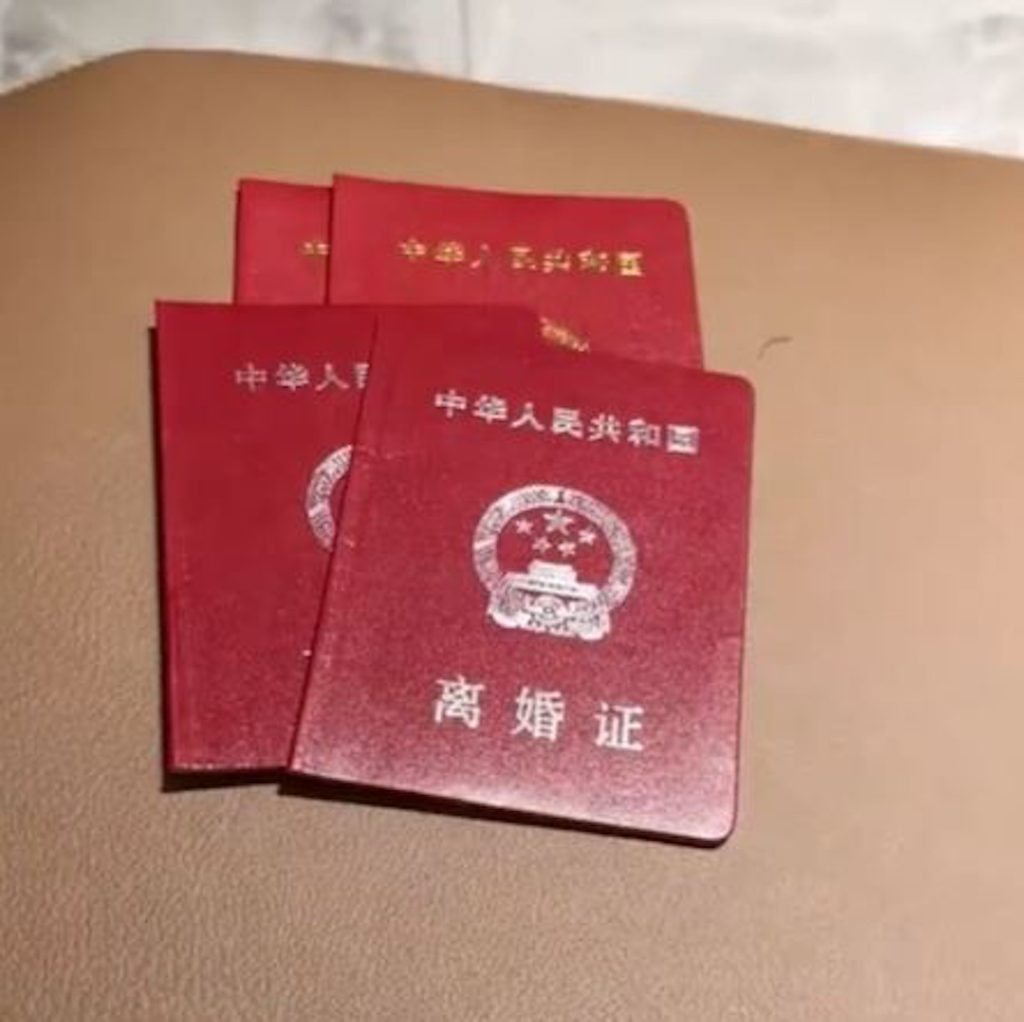
- You are preparing certified translation for divorce court or child custody document translation legal packets where one term can change legal interpretation.
- You want predictable turnaround and pricing, not repeated quote cycles.
Legal Standards That Actually Matter in Court Packets
For U.S. litigation workflows, these are the practical anchors I use when designing a translation packet:
- FRCP Rule 30: governs deposition procedure and record handling, including how exhibits are used in testimony context.
- FRE Rule 604: interpreters/translators must be qualified and provide true translation under oath or affirmation context.
- FRE Rule 901: evidence must be authenticated as what the proponent claims it is.
- 8 CFR 103.2(b)(3): for USCIS filings, foreign-language documents require a full English translation plus translator certification of accuracy and competence.
2026 update on AI-evidence rulemaking: as of February 16, 2026, proposed new FRE 707 is still in the federal rulemaking process and is not currently effective law. The judiciary lists it as a projected future amendment for December 1, 2027, subject to delay or withdrawal: Pending Rules and Forms Amendments. Public hearing records are available at Transcripts and Testimony.
Counterintuitive but important: in many real disputes, a notarized translation with weak exhibit mapping is easier to attack than a non-notarized certified translation with full traceability and complete certification details.
Deposition and Exhibit Standards: A Practical Compliance Checklist
Deposition transcript package standard
- Keep witness Q/A flow aligned with the source transcript so brief citations remain stable.
- Preserve timestamps, speaker labels, and exhibit call-outs where available.
- Mark unclear content as brackets such as [Illegible], not guesses.
- Use consistent party names and defined terms across all translated exhibits.
Exhibit package standard
- Use mirror formatting to preserve structure, tables, signatures, seals, and margins.
- Retain exhibit IDs and Bates references exactly as produced in discovery.
- Translate all visible text, including handwritten annotations and stamp text.
- Attach a signed certification page that identifies document scope clearly.
| Deadline Window | Action | Why It Reduces Risk |
|---|---|---|
| T-10 days | Freeze exhibit list, IDs, and filename convention | Prevents citation mismatch between motions and translated exhibits |
| T-7 days | Complete full translation plus legal terminology review | Catches ambiguity before filing pressure peaks |
| T-3 days | Finalize certified packet and cross-check Bates mapping | Reduces objection risk tied to authentication and traceability |
| T-1 day | Lock final filing bundle with source + translation + certification | Avoids last-minute substitutions that create record confusion |
Common Mistakes and Consequences (Pitfalls)
- Submitting summaries instead of full translation. Consequence: completeness challenges, re-translation, and delayed hearing preparation.
- Dropping stamps, side notes, or back-page text. Consequence: opposing counsel may challenge authenticity and context integrity.
- Using AI-only output without accountable certification. Consequence: reliability attacks and higher burden to defend evidence integrity.
- Breaking exhibit traceability (missing Bates/exhibit labels). Consequence: procedural objections and weakened evidentiary presentation.
- Assuming notarization fixes everything. Consequence: extra cost without solving core accuracy or mapping defects.
CertOf vs Traditional Translation Routing for Litigation Teams
| Factor | CertOf Workflow | Traditional Offline Workflow |
|---|---|---|
| Turnaround | Often 5-10 minutes for standard pages (complex files may require longer review) | Commonly 24-72 hours including quote and email cycles |
| Price clarity | $9.99 per page, transparent pricing | Variable quotes, frequent rush add-ons |
| Formatting | Mirror formatting to support exhibit review | Often plain-text output, variable layout quality |
| Compliance posture | Human-reviewed certified output and USCIS acceptance guarantee policy with refund terms | Policy language and accountability vary by vendor |
| Ordering model | Fully online upload, pay, download | Manual intake and fragmented delivery are common |
Important boundary: no vendor can guarantee a court ruling. Court admissibility remains at the court’s discretion.
3-Step Workflow to Get Court-Ready Translation
- Start an online certified legal translation order and upload your source files.
- Review page count and confirm transparent pricing; no mandatory notarization upsell.
- Download your certified package and send it to counsel for filing strategy review.
Need a tight turnaround? Request rush legal translation support from CertOf.
Trust, Privacy, and Service Policies
- Read CertOf privacy policy for legal-document handling.
- Review CertOf terms of service.
- Check USCIS acceptance guarantee and refund policy details.
- Explore CertOf certified translation services for courts, USCIS, universities, and financial institutions.
Related CertOf Guides (to avoid repeating known basics)
- difference between certified and notarized translation
- certified translation of WhatsApp messages for court
- certified translation of divorce decree to English
- USCIS certified translation requirements
- fast certified translation benchmarks by document type
FAQ
Do I need notarized translation for court, or is certified translation enough?
It depends on jurisdiction and judge preference. In many U.S. filings, certified translation with strong traceability is the core requirement. For the practical distinction, see difference between certified and notarized translation.
Can I use AI-only output for discovery document translation services?
For litigation, AI-only output is high risk. A human reviewer must take accountability for completeness and accuracy, especially where exhibit authentication will be contested.
What should a court-facing certification include?
At minimum: translator competence statement, completeness and accuracy statement, signature, date, and clear identification of translated documents. Missing scope details are a common reason packets get challenged.
Can I certify my own translation if I speak both languages?
Self-certification can create neutrality problems in contested matters. A disinterested third-party process is usually safer, similar to the risk logic discussed in can I translate my own documents for USCIS.