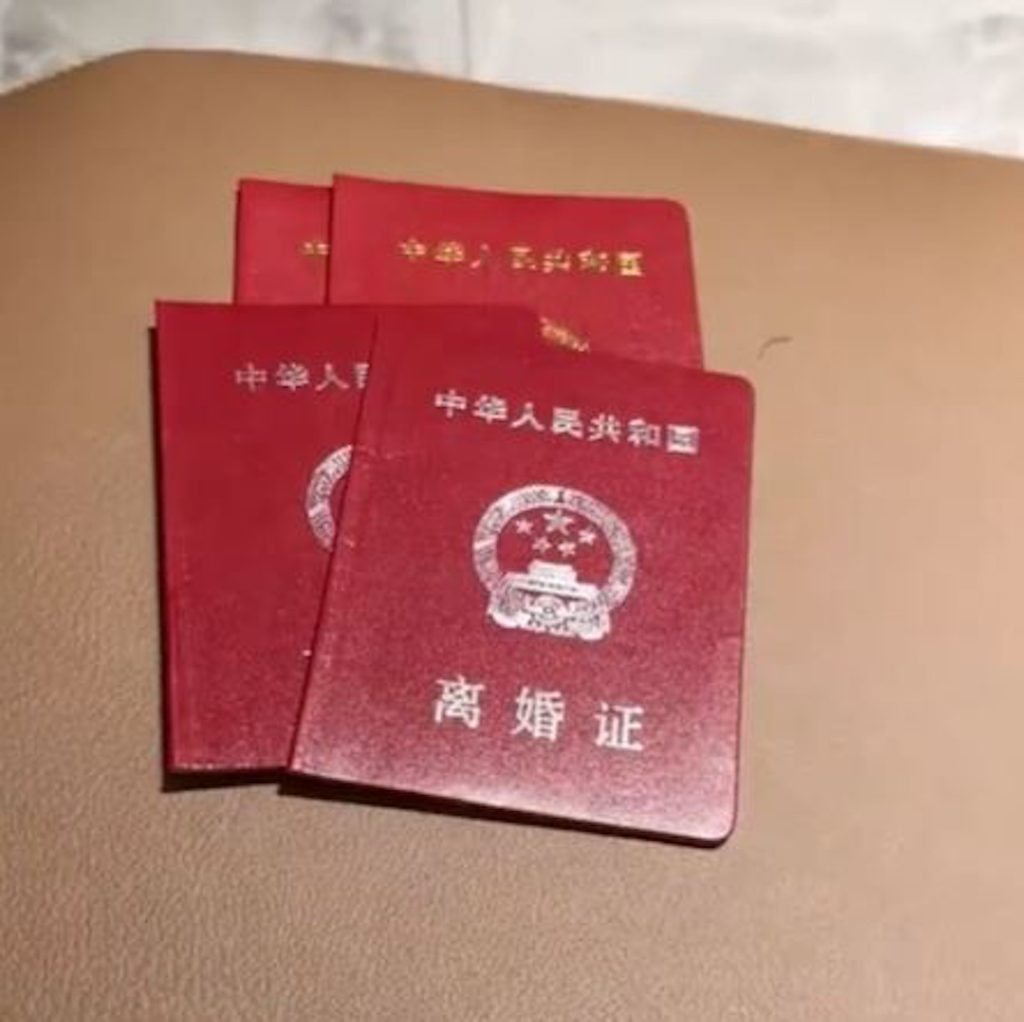
Buying Property in Krasnoyarsk with Foreign Documents: Notarized Russian Translation, MFC Filing, and Local Pitfalls
Buying property in Krasnoyarsk with a foreign passport, marriage record, divorce document, or power of attorney usually becomes a paperwork problem before it becomes a real-estate problem. Most readers looking for this are not asking for a generic translation. They are trying to make a foreign-language file usable for a local notary, an MFC intake desk, and the Rosreestr registration chain.
That is why the key local term is usually notarized Russian translation or нотариально заверенный перевод, not the broader English phrase “certified translation.” In this guide, “certified translation” is only a bridge term for international readers.
Key Takeaways
- In Krasnoyarsk, the core registration rules are federal, but the real local friction is practical: which intake point you use, whether your foreign documents are submission-ready, and how many extra visits a bad document chain creates.
- If your file includes a foreign-language passport, civil-status document, or power of attorney, prepare the Russian translation package before you book the filing step. Under Federal Law No. 218-FZ, Article 21 and the Notariate Fundamentals, Article 81, foreign-language documents in the registration chain are handled through Russian translation and notarial formalities.
- Krasnoyarsk applicants usually deal with MFC intake rather than a single property counter. The city administration’s property FAQ points users to Rosreestr and MFC filing locations including ul. 9 Maya, 12, ul. 52-y kvartal, 3, and ul. Petra Podzolkova, 3: official city FAQ.
- A counterintuitive point: a notarized deal can register faster than a standard filing. Under Article 16 of 218-FZ, filing through MFC is generally 9 working days, while a notarized deal filed through MFC is generally 5 working days.
Who This Guide Is For
This guide is for buyers and sellers dealing with residential property in Krasnoyarsk whose file includes non-Russian documents and who need a practical route from document preparation to filing. It is most relevant for cross-border families, foreign nationals living in Russia, people signing from abroad through a representative, and anyone whose ownership file includes a foreign passport, marriage or divorce record, name-change proof, or power of attorney. The most common language pair is English-to-Russian, but the real issue is broader: any foreign-language document that must be turned into something a local notary, MFC clerk, Rosreestr officer, bank, or seller-side lawyer can use without sending you back for corrections.
What Usually Goes Wrong First
The most common mistake is treating translation as a finishing step. In practice, translation is the bridge that lets your foreign identity and authority documents enter the Russian property system. If that bridge is weak, the filing chain slows down immediately.
- A foreign passport may be acceptable in principle, but still unusable in practice until the Russian version is prepared in a form the local filing chain will accept.
- A marriage certificate or divorce record may look secondary, but it quickly becomes central if you need to explain spouse consent, a prior surname, or ownership history.
- A foreign-issued power of attorney may be valid where it was signed, but still fail in Russia if the apostille or legalization, translation, and notarization sequence was handled badly.
- An old-versus-new passport mismatch can create a registration pause even when the transaction itself is genuine.
If you need a broader explanation of translation types, start with Certified vs Notarized Translation. If your question is really about how much of an extract or title document needs translating, see Certified Translation of a Land Registry Extract for Property Purchase and Full vs Summary Translation for Property Deeds and Registry Extracts. Those topics should stay separate from this city guide.
What Kind of Translation You Actually Need
This is one area where the answer should stay short and precise. Russia’s property-registration rules are mainly federal, not Krasnoyarsk-specific. Under Article 21 of 218-FZ, foreign-language documents in the registration-facing chain must be usable in Russian. Under Article 81 of the Notariate Fundamentals, the notary either certifies the translation or the translator’s signature. That is why plain translation and notarized Russian translation are not interchangeable for this use.
For most ordinary buyers, the working rule is simple: if the document proves identity, marital status, name continuity, or representative authority, assume you need the Russian version in notarized form before your filing trip. Do not leave that question for the MFC counter.
The Documents That Most Often Need Attention
- Foreign passport of the buyer or seller.
- Marriage certificate if a spouse-consent issue may arise.
- Divorce certificate or judgment if surname history or previous marital status matters.
- Name-change record where the property file and current passport do not match neatly.
- Power of attorney for remote signing, filing, or representation.
- In some cases, supporting extracts or title-basis documents when a bank, lawyer, or counterparty needs a working translation for review.
Not every paper needs the same level of treatment. Some documents need registration-grade Russian translation. Others only need a reading version so the parties understand what they are signing. Mixing those categories is one of the easiest ways to over-order translation or show up with the wrong file.
Where Krasnoyarsk Buyers and Sellers Actually Go
MFC and Rosreestr intake reality
For most standard cases, Krasnoyarsk applicants use MFC intake rather than relying on one specialist real-estate desk. The city administration’s property FAQ points users to Rosreestr and local MFC filing points, and the city’s MFC page directs residents to the network and hotline 8-800-200-3912: Krasnoyarsk MFC page. If you want to plan a filing trip, this is the right place to start rather than guessing which office will handle your property case.
The practical problem is simple: a translation issue usually turns into an MFC return-trip issue. If the passport wording, POA chain, or civil-status document is not ready for filing, the cost is often delay and repeat visits, not just a technical note.
Roskadastr for extracts, records, and corrections
Krasnoyarsk also has a consultation center of the regional branch of PPK Roskadastr at ul. Petra Podzolkova, 3, tel. 8 (391) 202-69-40 ext. 2664. The city’s official page lists public hours as Monday to Thursday 8:00-17:00 and Friday 8:00-15:45: PPK Roskadastr. If your issue is an EGRN extract, cadastral information, or a correction path, this is often a more useful local node than returning to the translation stage blindly.
Municipal property is a different workflow
If the matter involves municipal housing privatization, address assignment, or land-related municipal paperwork, the operational route changes. Krasnoyarsk’s Municipal Center of Real Estate lists intake at ul. Karla Marksa, 49, Monday to Friday 9:00-17:00 with a 13:00-14:00 break, and advance booking by phone at 8 (391) 273-02-30: Municipal Center of Real Estate. That is not the same as a routine apartment resale workflow, so do not assume the same document route applies.
Wait Times, Scheduling, and Mailing Reality
The legal timing rule is federal. Under Article 16 of 218-FZ, standard registration of rights is generally 7 working days if filed directly and 9 working days if filed through MFC. A notarized deal is generally faster: 3 working days if filed directly and 5 working days if filed through MFC.
That does not mean a foreign-document-heavy deal feels fast. In Krasnoyarsk, the real schedule has to include translator coordination, notarial certification, MFC booking, document pickup, and any correction cycle. Mailing can work, but for most buyers and sellers it is not the preferred path when original documents and notarized translations are involved. If someone must sign from abroad, plan around the power-of-attorney and translation chain first, then the courier step second.
What Local User Discussions Keep Repeating
Forum discussions are not official rules, but they are useful for showing the same practical pain points from a different angle.
- On Cian’s realtor forum, users keep returning to the same problem: which identity document should be used when a foreign national also has Russian residence paperwork. That is a document-chain question, not a real-estate-market question.
- On another Cian discussion and on Kvartira-Bez-Agenta, the recurring issues are passport translation, old-versus-new document mismatch, spouse consent, and handling a remote power of attorney.
Those discussions should not be treated as law. Their value is that they match what usually causes avoidable repeat visits in a city like Krasnoyarsk: the foreign-document chain was not made filing-ready early enough.
Local Fraud and Complaint Paths
Krasnoyarsk’s local anti-fraud guidance is worth reading even if your translation package is excellent. A district prosecutor explainer published on June 18, 2025 warns about electronic real-estate registration risks and explains why digital convenience does not remove fraud risk by itself: district prosecutor explainer. The practical lesson is that better paperwork is also a fraud-control tool. If the identity chain, authority chain, or ownership logic does not read cleanly in Russian before filing, you are not ready to sign.
If the problem is a government-service decision, delay, or refusal, the public pre-trial complaint route is through Gosuslugi: pre-trial appeal portal. For local routing and service navigation, the city also provides its own services portal and property FAQ.
Local Translation Providers
| Provider | Public local signal | Best use in this topic | Boundary |
|---|---|---|---|
| Neo Tran | Public site lists notarized-document translation services and a Krasnoyarsk office. | Useful when you need a bureau that already works with personal documents and notarial formatting. | Check whether your file needs registration-grade translation or only a reading version for review. |
| A. Concord | Public Krasnoyarsk bureau site with city contact information and broad language coverage. | Useful as a visible local bureau for passports, civil-status documents, and similar papers. | A bureau site does not prove transaction-specific legal review. |
| Intercenter | Public page specifically advertises notarized document translation in Krasnoyarsk. | Useful when the issue is clearly the notarized translation step rather than the broader property deal. | Treat commercial speed or quality claims as provider claims, not as official guarantees. |
These are not official recommendations. They are examples of locally visible providers with public signals relevant to notarized Russian translation.
Public and Non-Commercial Resources
| Resource | Public signal | Best use | Limit |
|---|---|---|---|
| Krasnoyarsk MFC page | Official city page for the MFC network and hotline. | Best for checking the intake network before a filing trip. | It does not prepare or review your translation package. |
| Roskadastr consultation center | Official city page with address, phone, and service hours. | Best for extracts, cadastral questions, and some correction paths. | Not a substitute for legal advice or document drafting. |
| Municipal Center of Real Estate | Official city page with intake details and booking phone. | Best when the property issue is municipal rather than a routine resale apartment transaction. | Not the default path for every property purchase. |
The Most Useful Local Data Point Here
There is no public local dataset that matters more to this topic than the filing structure itself. The most useful Krasnoyarsk-specific facts are operational: the city names multiple MFC intake points, publishes a dedicated Roskadastr consultation center with public hours, and separates municipal-property intake from ordinary resale reality. That tells you something important about risk: this is not a one-door process, and a document error can send you into the wrong channel unless you know whether your problem is filing, records, or municipal property.
When CertOf Helps Most
CertOf is most useful before the filing trip: turning foreign passports, civil-status records, powers of attorney, and supporting papers into a clean translation package that is easier to use at the next local step. CertOf does not replace a Russian notary, a local real-estate lawyer, Rosreestr, or an MFC counter. It helps with document preparation, consistency, and reducing preventable rework.
If you want to start from the document side, you can upload your documents for review, read how online ordering works, or choose between PDF, Word, or paper delivery. If physical delivery matters, see hard-copy mailing options.
FAQ
Do I need a certified translation or a notarized Russian translation for a property purchase in Krasnoyarsk?
For this use, the more accurate local term is usually notarized Russian translation. “Certified translation” is the global bridge term, but the practical standard in this filing chain is whether the Russian version can be used in notarized form.
Can I buy an apartment in Krasnoyarsk with a foreign passport?
Often yes, but the filing problem is whether the passport and related supporting documents are translated and prepared in a form the Russian property chain can use without delaying the registration step.
Where do I actually submit property registration documents in Krasnoyarsk?
For many ordinary cases, the real intake route is MFC rather than a single specialist counter. The city’s property FAQ points users to Rosreestr and local MFC locations including ul. 9 Maya, 12, ul. 52-y kvartal, 3, and ul. Petra Podzolkova, 3.
What if my power of attorney was issued abroad?
Do not assume it is filing-ready just because it was valid where it was signed. In Russian property work, the order of apostille or legalization, translation, and notarization matters, and that issue should be handled before the filing appointment is booked.
What should I do if Rosreestr pauses or refuses registration because of a document problem?
First identify whether the issue is translation, notarial form, authority, or a record mismatch. Then use the right local node: MFC for intake problems, Roskadastr for some extract and correction problems, and the public pre-trial appeal route if the service decision itself is the issue.
Disclaimer
This guide is general information, not legal advice, tax advice, or a substitute for transaction-specific review by a Russian notary, lawyer, bank, Rosreestr, or MFC officer. Property registration rules are mainly federal, while Krasnoyarsk-specific differences are mostly operational. If your file involves unusual ownership history, land restrictions, sanctions exposure, or a disputed authority chain, get local legal advice before signing.
CTA
If your Krasnoyarsk property file includes a foreign passport, marriage or divorce paper, or power of attorney, handle the translation package before the filing appointment. Send your documents to CertOf for a practical review of what needs translation, what likely needs notarized handling, and how to reduce rework before you reach the local notary or MFC desk.