Does a Court Interpreter Replace Certified English Translation in Ohio Child Custody and Adoption Cases?
If you are handling a child custody or adoption matter in Ohio and the key documents are not in English, the most common mistake is assuming that a court interpreter will solve the whole language problem. In Ohio, that is usually not how it works. A court interpreter helps a party or witness take part in a hearing or other court function. The written record is a different question. For foreign birth certificates, foreign custody orders, or foreign adoption decrees, you often still need a certified English translation for court use that can be filed or attached as an exhibit.
This is especially important in probate, juvenile, and domestic relations matters where families often have both problems at once: they need language access for a hearing, and they also need filing-ready English documents for the judge. If you need the document side of that work done quickly, submit your files for certified translation online.
Key Takeaways
- In Ohio, an interpreter and a translator are not the same role. The current Rules of Superintendence define a translator as someone who turns written text into equivalent written text, while interpreters handle spoken communication. See Sup.R. 80-89.
- If your case involves a foreign-language exhibit, having a hearing interpreter does not automatically make the exhibit filing-ready. Cuyahoga County Probate Court expressly requires documents filed with the court to be in English, and a foreign-language exhibit must have a certified English translation attached. See Local Rule 57.
- For foreign adoption recognition, Ohio state law itself points to written translation. Under R.C. 3107.18, a foreign adoption decree or certificate that is not in English must be accompanied by a translation certified as accurate by the translator.
- Ohio has an unusually strong local signal on AI: since November 13, 2025, courts may not use AI to translate substantive legal writings such as legal forms or court orders. That makes it even less realistic to expect a courtroom workaround for missing written translations. See Sup.R. 87.
Disclaimer: This guide is practical information, not legal advice. Ohio family-law procedure can turn on the county, the judge, and the exact kind of case. If you are unsure whether your document must be translated before filing, ask the clerk or your lawyer before the hearing date.
Who This Guide Is For
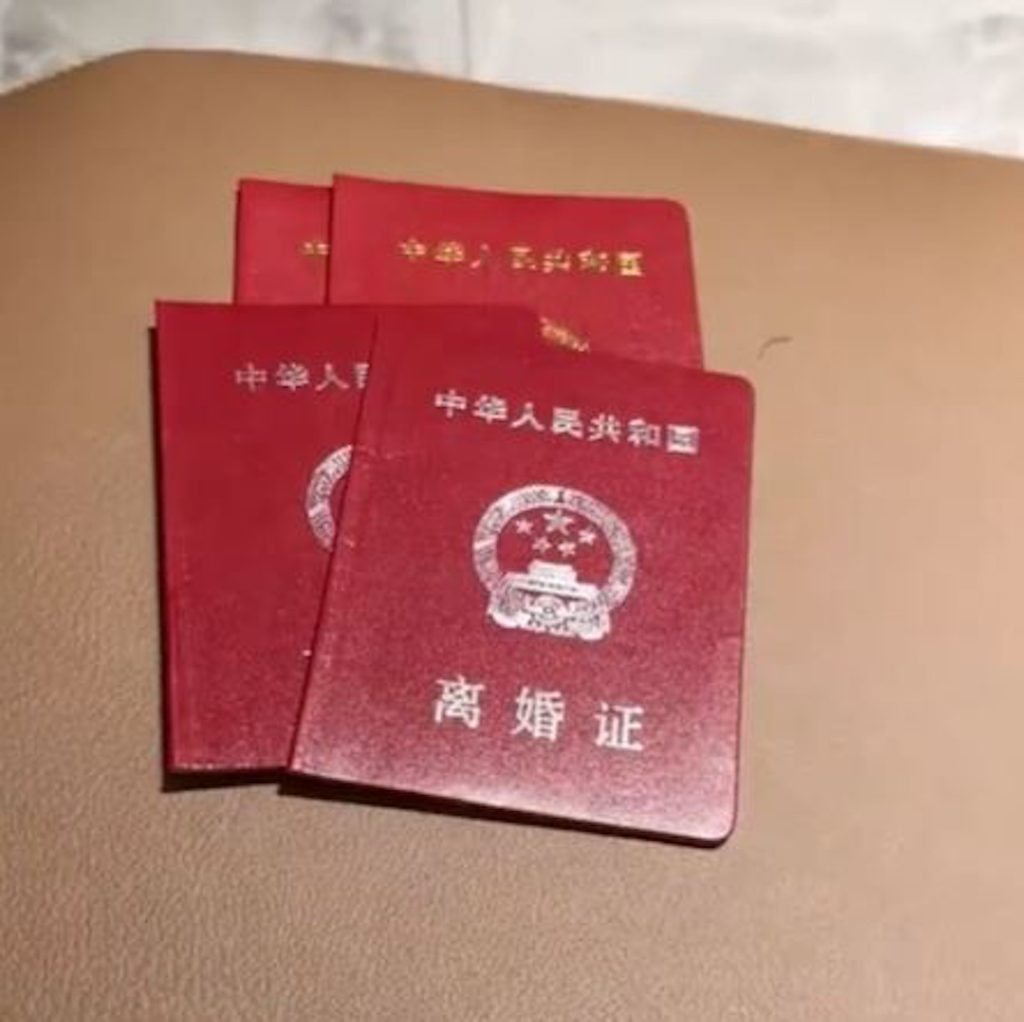
This guide is for people handling child custody or adoption matters in Ohio at the state and county court level, especially families dealing with probate, juvenile, or domestic relations filings that include foreign-language records. It is most useful if your file includes documents such as a foreign birth certificate, foreign custody order, foreign guardianship papers, divorce records, a foreign adoption decree, passport pages, or supporting school and medical records.
The most likely readers are adoptive parents trying to recognize a foreign adoption and obtain an Ohio birth record, parents or guardians presenting foreign court records in a custody dispute, and limited-English-proficient court users who already know they need an interpreter but are not sure whether that also covers the documents. Common language pairs in Ohio court language-access materials and interpreter credentialing include Spanish-English, Arabic-English, Mandarin-English, Russian-English, Korean-English, French-English, Vietnamese-English, and some less common languages handled by remote or relay arrangements.
The Real Ohio Workflow: Where People Get Stuck
In practice, this issue usually appears in one of four paths.
- You are filing first. You upload or hand in a petition, motion, or exhibit packet, and the clerk or court expects English-language documents. This is the point where written translation matters most.
- You are scheduled for a hearing. You need to understand the judge, answer questions, or follow what other parties are saying. This is the point where an interpreter matters most.
- Your case has both oral and written language problems. That is common in foreign adoption recognition and in custody matters built around foreign civil records.
- You discover the problem too late. The hearing date is close, interpreter coordination is still pending, or your exhibits are not filing-ready. That is where delays, continuances, or rejected filings start to happen.
Ohio’s statewide language-services framework is built around meaningful participation in court, not around turning your foreign documents into written English for the case file. The Supreme Court of Ohio’s Language Services Section says you may have the right to a court-appointed interpreter and provides a complaint line if one is not provided. But that same framework does not say that a court-appointed interpreter substitutes for filing-ready translations of your exhibits.
What Ohio Rules Actually Separate
The cleanest way to understand this topic is to separate oral participation from written evidence.
Oral participation: Under Sup.R. 88, an Ohio court must appoint a foreign-language interpreter when a limited-English-proficient party or witness needs one for meaningful participation in a case or court function. The rule also sets the preference order for qualified interpreters and requires the court to summarize on the record when it cannot get the highest-preference interpreter.
Written evidence: The same rules separately define a translator as a person who renders written text into equivalent written text. That matters because the rules do not collapse translation into interpretation. Ohio’s judicial handbook makes the same point in plainer language: a good or certified interpreter is not automatically a competent translator, and assigning long documents for sight translation is discouraged. That is the practical answer to the user question behind this article.
Anti-intuitive Ohio point: since the rule changes effective November 13, 2025, Sup.R. 87 says a court shall not use artificial intelligence to translate substantive legal writings such as legal forms, court orders, probation conditions, and similar writings that may affect the outcome of a case or a litigant’s rights. So if you were hoping the court could simply handle the translation later, Ohio’s current rules cut in the other direction.
How This Plays Out in Adoption Cases
Adoption is where Ohio gives the clearest written answer. For recognition of a foreign adoption, R.C. 3107.18 requires the petition to include a foreign adoption decree or certificate and, if it is not in English, a translation certified as accurate by the translator. That means the written translation is part of the statutory package, not an optional courtroom convenience.
Franklin County Probate Court’s adoption guidance also shows how this works on the ground. The court states that adoption matters are e-filed, that recognition of foreign adoption is one of its adoption tracks, and that a suggested hearing date for recognition of foreign adoption is 30 days from filing. See Franklin County Probate Court Adoption. The court’s form list for recognition of foreign re-adoption specifically tells filers to upload all foreign adoption documents and the child’s citizenship or visa record. If those records are not in English, waiting until the hearing to solve the language issue is the wrong sequence.
Another useful county-level example is Greene County Probate Court, whose foreign-adoption filing checklist requires a translated version of the child’s birth certificate and a translated version of the foreign decree or certificate of adoption. That is not statewide text, but it is a strong Ohio probate signal that written translation is treated as filing preparation, not as a hearing-only problem.
One more Ohio-specific point matters here: adoption hearings and records are confidential by law under R.C. 3107.17. That makes it even less realistic to assume a judge or clerk will use the hearing itself as the place to sort out a stack of untranslated foreign records.
How This Plays Out in Custody Cases
Custody cases are more fragmented because Ohio splits family matters across different courts. Depending on the posture of the case, you may be in juvenile court, domestic relations court, or sometimes probate-related proceedings for guardianship issues. Ohio Legal Help’s plain-language custody materials are useful because they show the court split that confuses many nonlawyers: a non-parent custody case may be filed in domestic relations or juvenile court, while guardianship is probated and adoption is different again.
That split matters because written-translation expectations are often set by the court’s local filing and exhibit rules, not by one single statewide custody statute spelling out the translation rule for every document. In other words, the interpreter question is statewide, but the exhibit-handling question becomes local much faster.
The strongest local example is still Cuyahoga County Probate Rule 57: all documents filed with the court shall be in English, and if a document is used as a foreign-language exhibit, a certified English translation shall be attached alongside that exhibit. Even though that is a probate rule, it gives a concrete Ohio answer to the misconception that an interpreter at hearing time automatically fixes exhibit compliance.
Does Ohio Require Notarization Here?
Usually, the core issue in the Ohio materials above is accuracy certification, not a blanket notarization rule. The foreign-adoption statute speaks in terms of a translation certified as accurate by the translator. Cuyahoga’s probate filing rule speaks in terms of a certified English translation attached to a foreign-language exhibit. Those are not the same thing as a universal requirement for notarization.
That is why families should not assume that court use automatically means notarized translation. Sometimes notarization becomes relevant because another agency, a foreign country, or an apostille chain needs it. But for the Ohio court problem discussed here, the first question is usually whether the court needs an accurate written English translation that can be filed. For the broader distinction, see our guides on certified vs notarized translation and certified translation for court proceedings and exhibits.
Local Scheduling, Filing, and Delay Reality
This is the part users feel most sharply.
- Interpreter timing: Franklin County Probate Court says interpreter services are available for hearings and that 48 hours’ notice is preferred, with same-day requests depending on time and availability. That is a good reminder that interpreter scheduling itself can be tight.
- E-filing and hearing calendars: Franklin County Probate Court says adoption matters are e-filed and recognition of foreign adoption has a suggested 30-day hearing setting from filing.
- Remote coverage exists, but it is not the same as translation preparation: the Supreme Court of Ohio says roster interpreters are available telephonically and by video to assist courts statewide.
- Rejected filings are a real risk: Cuyahoga Probate’s rule expressly gives the court discretion to accept or deny filings that fail to comply with filing requirements.
The practical lesson is simple: if you wait to solve document translation until the week of hearing, you may still get language access for the hearing but not a filing-ready exhibit set.
What Ohio Users Commonly Trip Over
Public Ohio-facing questions and community posts point to a few repeat problems. These are anecdotal, not rules, but they are useful because they match the official workflow above.
- Ohio families dealing with old or foreign adoption paperwork often discover that they are missing an old home study, old decree copy, or the right vital-record request form. That is a strong signal that document preparation problems arise long before hearing day.
- Public legal Q&A from Ohio adoption users repeatedly shows confusion over whether probate paperwork can be handled without counsel, what must be filed first, and whether a certified birth record alone is enough.
- Community discussions about Ohio adoption records also show county-by-county variation in record access and filing history, which is another reason not to rely on an interpreter as the last-minute fix for missing English documents.
Those signals are not proof of a statewide rule. What they do show is that Ohio families often run into paperwork sequence problems, not just language-access problems.
Ohio Data That Actually Matters Here
- According to the U.S. Census Bureau QuickFacts for Ohio, foreign-born persons were 5.0% of the Ohio population in 2019-2023. That matters because even a modest statewide foreign-born share still produces a steady need for foreign civil documents in family-law matters.
- Franklin County Domestic Relations and Juvenile Court reported 5,959 interpreter requests in 2024 across 82 languages, with Spanish, French, Nepali, Arabic, and Somali as the most common languages in that court. That does not prove statewide rankings for custody or adoption, but it does show that language access is not edge-case infrastructure in Ohio family courts.
Commercial Translation Providers With Ohio Presence Signals
This is not a ranking. Because this is a statewide reference page rather than a city-by-city provider roundup, treat the list below as example Ohio presence signals, not a recommendation list. The key question for this article is still the same: who can produce filing-ready written translations, not who can appear as your courtroom interpreter.
- Bond Enterprise Language Services, 341 S 3rd St Ste 100, Columbus, OH 43215, (614) 636-2905. Ohio-based company describing document translation, certified translation, and interpretation services across Ohio. Public local signal: Ohio headquarters and BBB listing.
- Access 2 Interpreters LLC, 492 S High St Ste 200, Columbus, OH 43215, (614) 221-1414. Public business profiles say the company offers interpretation and document translations, with interpretation focused in the Columbus metro area and document translations available more broadly.
- Certified Interpreters United, LLC, 1536 Saint Clair Ave NE, Cleveland, OH 44114, (216) 765-3700. Public business profile describes work involving courts, including civil, domestic relations, juvenile, and probate settings.
If you want a fully online document-prep option rather than a local office visit, CertOf is best positioned for the written side of the problem: document translation, certification wording, format retention, and revision support. It is not a law firm and it does not replace a court-appointed interpreter. You can start through the CertOf submission page, review how online ordering works in this ordering guide, or compare delivery options in our hard-copy delivery guide. If your file includes decrees, handwritten notes, stamps, or other messy court records, these related guides may also help: adoption decree certified translation and certified translation of handwritten documents.
Public and Legal-Support Resources
- Supreme Court of Ohio Language Services Section, 65 S. Front Street, Columbus, OH 43215, phone 614-387-9000, complaint line 1-888-317-3177. Use this if an Ohio court does not provide an interpreter when one is needed.
- OhioKAN, statewide kinship and adoption navigator, 1-844-644-6526. Useful when the issue is broader than translation and you need adoption or kinship navigation support.
- Ohio Legal Help, statewide self-help legal information. Useful for understanding whether your matter belongs in probate, juvenile, or domestic relations court before you spend money solving the wrong problem.
- Legal Aid Society of Cleveland, intake line (888) 817-3777, Spanish line (216) 586-3190. Useful for eligible low-income users with family, probate, or related civil issues in its service area.
Ohio Risks and Pitfalls
- You solve only the hearing problem and ignore the exhibit problem.
- You assume certified translation means notarization and spend money on the wrong extra step.
- You wait until the hearing week even though interpreter scheduling and exhibit prep are separate timelines.
- You file a foreign adoption packet without the English translation that the statute expects.
- You rely on machine output for a substantive legal writing after Ohio’s 2025 AI rule changes.
If your document set is still not in English, the safer order is: identify the court, identify which documents will be filed or attached, get the written translations prepared, then separately confirm interpreter arrangements for the hearing.
FAQ
Does a court interpreter replace certified written translation in Ohio child custody cases?
Usually no. The interpreter helps with spoken participation in the case. Whether your foreign-language document can be filed or used as an exhibit is a separate written-translation question.
Does a court interpreter replace certified written translation in Ohio adoption cases?
No for foreign adoption recognition. Ohio law specifically requires a non-English foreign adoption decree or certificate to be accompanied by a translation certified as accurate by the translator.
If I have an interpreter for my Ohio hearing, can the interpreter just read my birth certificate out loud?
That is not the safe assumption. Ohio judicial materials explain that sight translation is different from full written translation and discourage assigning long documents for sight translation.
Does Ohio require notarized translation for these cases?
Not as a blanket rule in the Ohio sources discussed here. The key requirement is usually an accurate written English translation with translator certification. Notarization may arise in other contexts, but it is not the same issue.
What if the court does not provide an interpreter?
Use the Supreme Court of Ohio language-services complaint path. The public complaint line listed by the court is 1-888-317-3177.
CTA
If your Ohio custody or adoption matter already involves foreign-language documents, do not wait for the hearing date to discover that your packet is still not filing-ready. CertOf can help with the document side: certified English translation, certificate wording, formatting that preserves seals and stamps, and revisions if your clerk or lawyer asks for adjustments. Start your order at translation.certof.com.
For related reading, see our Dayton child custody and adoption guide, our court exhibits translation guide, and our certified vs notarized translation explainer.