
Translation Classes A-D
The visual equivalence standard
Why classes matter
A good document translation is not only about changing words from one language to another. For official documents, the reviewer must also be able to check names, dates, numbers, labels, stamps, tables, photos, and field relationships against the original page.
Class A, B, C, and D describe how easy that check is. The higher the class, the less guessing a reviewer has to do.
For customers
The class helps you understand whether the translation will be easy for a school, immigration officer, court clerk, bank, or employer to review.
For reviewers
The class tells you how quickly the translated document can be compared with the source page, especially when layout and field matching matter.
The four classes
These classes describe the final output. They do not replace certification, and they are not a government rating. They explain how usable the translated page is when someone compares it with the original.
Highest fidelity
Class A
Plain meaning: the translation looks and works like the original.
- Preserves layout, tables, labels, stamps, photo areas, and field relationships
- Lowest reviewer effort
- Best for official review where fast comparison matters
Strong practical use
Class B
Plain meaning: the translation is complete and easy to use, but the layout is simpler.
- Preserves key text, labels, values, and basic structure
- Simplifies fine visual details and exact spacing
- Low reviewer effort
Readable, reduced
Class C
Plain meaning: the translation can be read, but checking it against the original takes more work.
- Preserves much of the translated text
- Reduces layout, grouping, and field-to-field matching
- Medium to high reviewer effort
Hard to verify
Class D
Plain meaning: there may be translated text, but the result is hard to verify.
- Preserves limited text value
- Structure and visual relationships are missing or unclear
- Highest reviewer effort
Quick comparison
| Feature | Class A | Class B | Class C | Class D |
|---|---|---|---|---|
| Layout match | Very close | Mostly clear | Reduced | Weak |
| Field mapping | Easy to verify | Usually easy | Requires effort | Hard to verify |
| Tables and labels | Preserved | Simplified | Partly reduced | Often unclear |
| Stamps, photos, visual areas | Kept in context | Kept or simplified | May be separated | Often missing context |
| Best use | Official review | Most practical review | Reading the content | Basic text reference |
Example: one source, four outputs
The source is a Vietnamese driver license translated into English. The goal is to keep the important information easy to find and compare.

What the output should keep
- Identity fields and license number
- Dates, labels, and field-value relationships
- Photo area and official document structure
- Reading order, so the reviewer does not need to guess
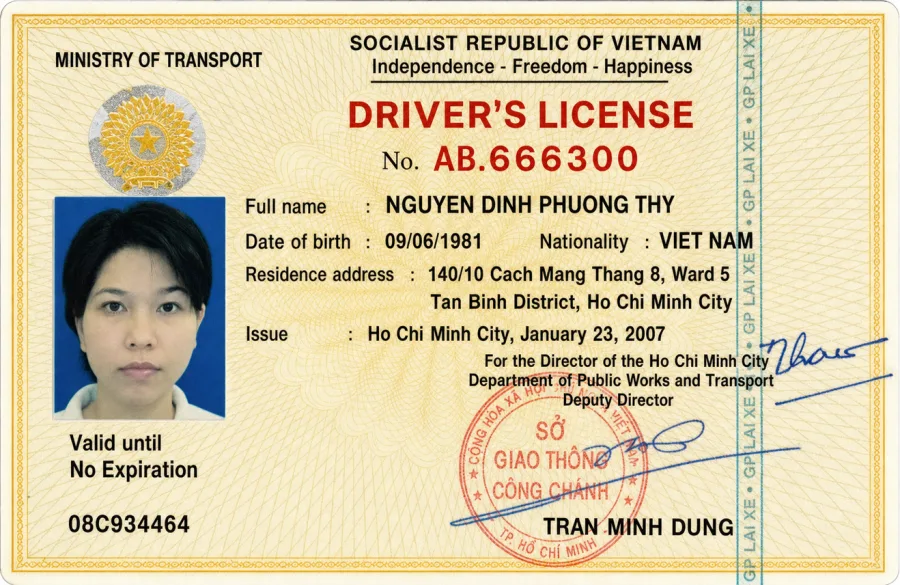
Class A: easiest to check
The translation keeps the original layout and field relationships. The reviewer can compare the English output with the Vietnamese source almost field by field.
What to notice: labels, values, photo area, and document structure remain visually connected.
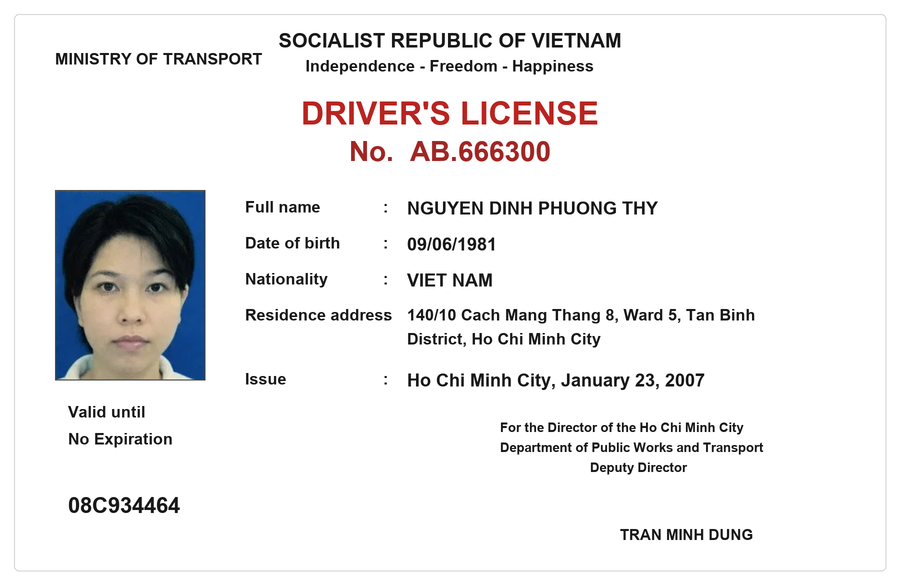
Class B: clear but simplified
The important information is still present and easy to compare, but some visual details are simplified. This can still be very usable.
What to notice: the document is readable and organized, but it does not copy the source structure as closely as Class A.
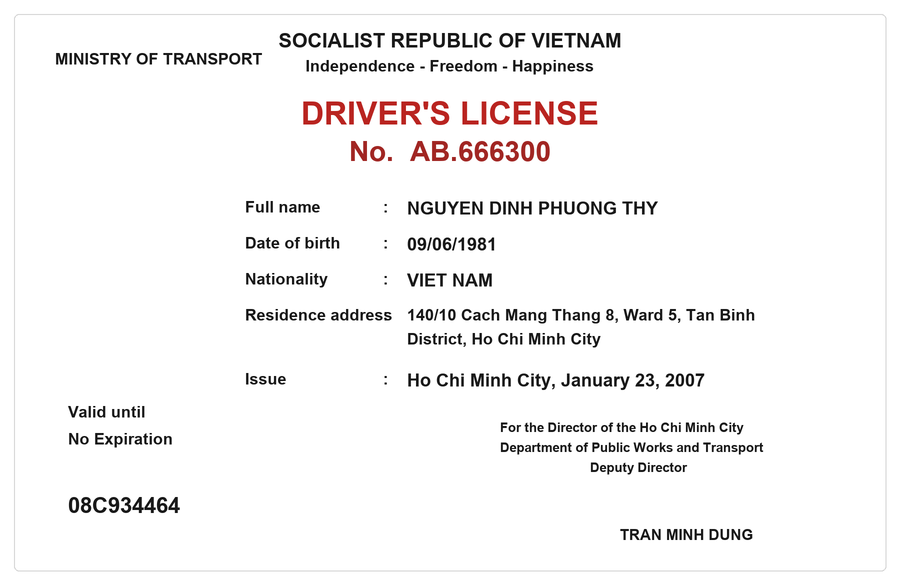
Class C: readable, harder to verify
The translation can be read, but the relationship between original fields and translated fields is less direct. Review takes more effort.
What to notice: the meaning is available, but the original page structure is no longer easy to follow.
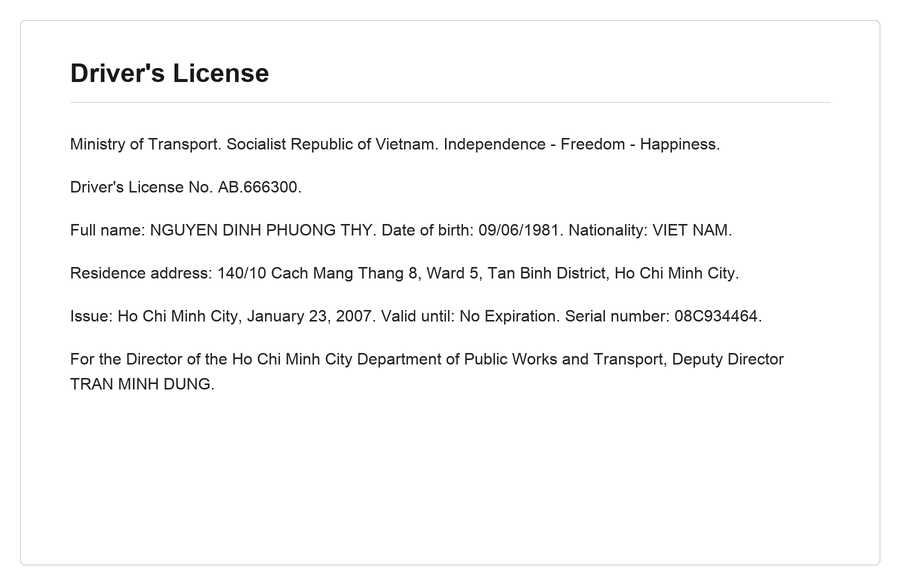
Class D: basic text value only
The output may contain translated text, but it is difficult to connect the result back to the source document. It is not visually equivalent.
What to notice: a reviewer would need to work hard to verify where the information came from.
Current quality tracking
80%
of CertOf translations reach Class A.
98%
reach Class B or better.
These numbers are quality signals, not the definition of the classes.
FAQ
Does Class A cost more?
No. The class describes output quality. CertOf’s pricing is based on the translation service and page rules, not a separate Class A surcharge.
Is Class A the same as certified translation?
No. Certified translation means the translation is delivered with a Certificate of Translation Accuracy. Class A describes how closely the translated page preserves the source document’s visual structure and field relationships.
When does visual equivalence matter most?
It matters most when a reviewer must compare the translation with the original document, such as immigration filings, school admissions, credential evaluation, court paperwork, bank review, or employment verification.
Can every document reach Class A?
Not always. Very poor scans, handwritten text, missing pages, heavy redactions, or damaged originals can limit what any translation system can preserve.
Ready to translate?
Upload a document for preview, compare more certified translation samples, or read the full standard.